
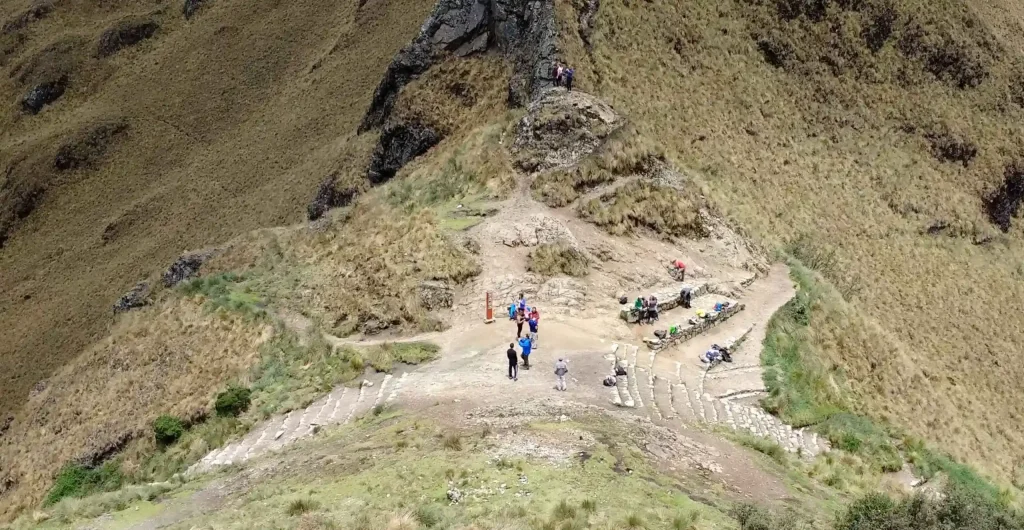
Dead Woman’s Pass is where most trekkers feel the Inca Trail for real. Not because it’s technical, but because of the constant stairs up and the punishing descent after.
If you prepare your lungs, you’ll survive the climb. If you prepare your legs properly, you’ll actually enjoy the day.
This guide focuses on the one thing most people ignore: how to train your knees for both directions.
Why Knees Struggle on the Inca Trail
The terrain is repetitive and unforgiving:
- Uneven stone steps with no rhythm
- Long uphill sections that fatigue your quads
- Extended downhill stretches that stress your knees
Most discomfort shows up after the pass, not before it. That’s because descending requires control, not just strength.
What Is Eccentric Strength (Simple Explanation)
Eccentric strength is your ability to control the lowering phase of a movement.
In real terms:
- Walking downhill
- Stepping down stairs
- Lowering into a squat
If you don’t train this, your muscles fatigue quickly and your knees absorb the impact. If you do train it, your legs act like shock absorbers.
How to Use the Stairmaster (The Right Way)
The Stairmaster is the closest thing to the Inca Trail you’ll find in a gym. But most people use it wrong.
Train like this:
1. Keep it steady
- Avoid sprinting
- Focus on a sustainable pace
2. Build duration first
- Start at 20 minutes
- Progress to 45–60 minutes
3. Stay upright
- Don’t lean heavily on the handles
4. Add light weight (optional)
- Small backpack (3–5 kg) to simulate your daypack
This builds the endurance you need for the long climb to the pass.
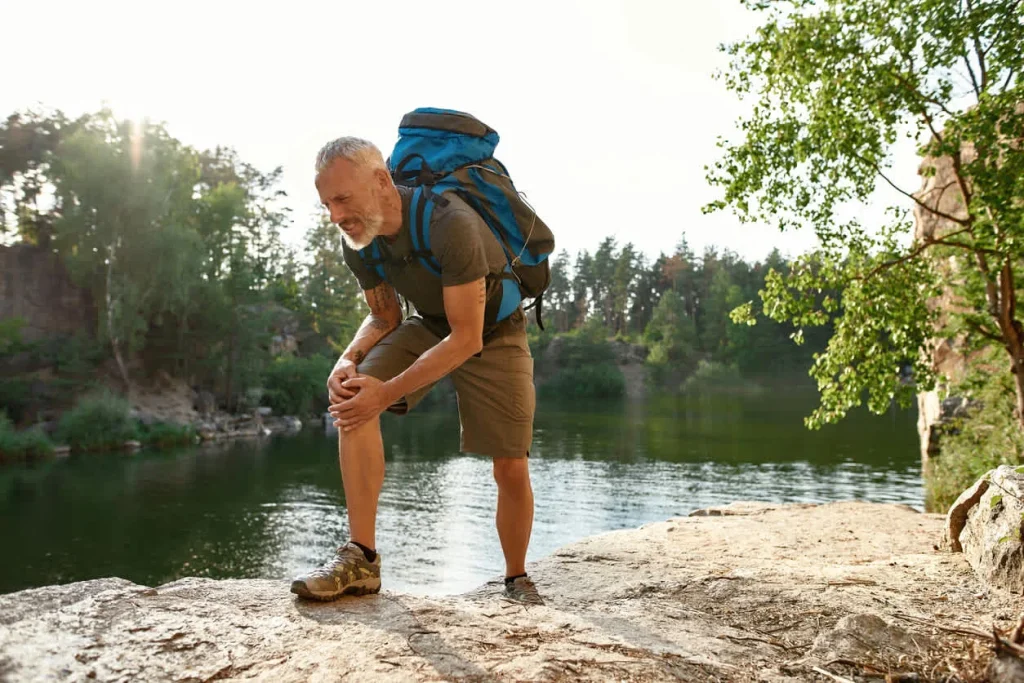
Core exercises to include:
Step-downs (priority exercise)
- Stand on a step or box
- Slowly lower one foot down over 3–5 seconds
- Control the movement completely
Slow squats
- Lower slowly (3–4 seconds)
- Stand up normally
Reverse lunges
- Step back instead of forward
- Focus on controlled descent
Single-leg work
- Helps with balance on uneven stones
Do this 2–3 times per week. No shortcuts here.
Simple Weekly Plan (Effective & Realistic)
| Day | Focus |
| Monday | Stairmaster (30–45 min steady) |
| Tuesday | Strength (eccentric focus) |
| Wednesday | Rest or light walk |
| Thursday | Stairmaster (intervals) |
| Friday | Strength + mobility |
| Saturday | Long walk or hike |
| Sunday | Rest |
Training for the Descent (Where Most People Fail)
Everyone trains for the climb. Very few prepare for coming down. To fix that:
- Practice downhill walking if you have access to trails
- Prioritize step-down exercises
- Avoid relying only on cardio
Strong descents = happy knees on Day 2 and Day 3.
Do Trekking Poles Actually Help?
Yes, especially on the way down. They:
- Reduce load on your knees
- Improve balance
- Help you control speed on steep steps
If you’re unsure about your knees, poles are one of the simplest ways to reduce strain.
How Fit Do You Need to Be?
You don’t need elite fitness. You should be able to:
- Walk 6–8 hours comfortably
- Climb stairs continuously
- Control your body on descents without collapsing into each step
Final Take
Dead Woman’s Pass is not about pushing harder. It’s about preparing smarter. If you:
- Use the Stairmaster consistently
- Train eccentric strength
- Prepare for descents, not just climbs
You’ll take pressure off your knees and turn the hardest day into a manageable one.

FAQS
Is Stairmaster training enough on its own?
No. It builds endurance for climbing, but you still need eccentric strength work for descents.
What’s the most important exercise for knee protection?
Step-downs. They directly train the movement pattern of going downhill.
How long should I train before the trek?
At least 6–8 weeks of consistent preparation.
Can I do the Inca Trail with sensitive knees?
Yes, with proper training and trekking poles, many people complete it without issues.
Should I train with a backpack?
Yes, but keep it light. Around 3–5 kg is enough to simulate real trekking conditions without overloading your joints.