
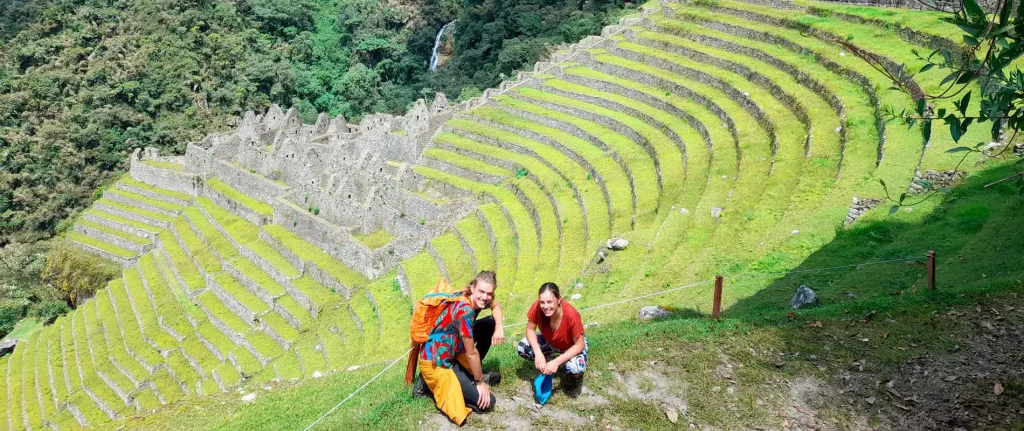
Book your spot on the world famous Inca Trail to Machu Picchu to see wonderful archeological sites like the formidable Winaywayna. Winay Wayna is the second most important Inca site you will encounter on the Inca Trail after Machu Picchu. Its name comes from a beautiful orchid that surrounds the Archaeological site Winay Wayna ¨Forever Young¨. Find out all the information about the Wiñayhuayna Inca ruins.
History of Wiñaywayna Inca ruins
Winay Wayna stayed hidden for a very long time, which might explain why its still so well preserved. It was discovered between 1940 and 1942 by Wenner Gren´s scientific expedition. After the rediscovery of Machu Picchu in 1911. Research into the site was led by the famous Peruvian Archeologist Julio C. Tello. He gave the site its current name of Winay Wayna. Named after a beautiful orchid found exclusively on the trail, the name is in Quechua (indigenous language of Peru) and translates to ¨Forever Young¨. The perfect name for an ageless site, that could rival the most modern and well-studied architecture. This precious orchid blooms all year round, therefore the coloration to it being Forever Young.
Location and climate of Wiñayhuayna Inca Ruins
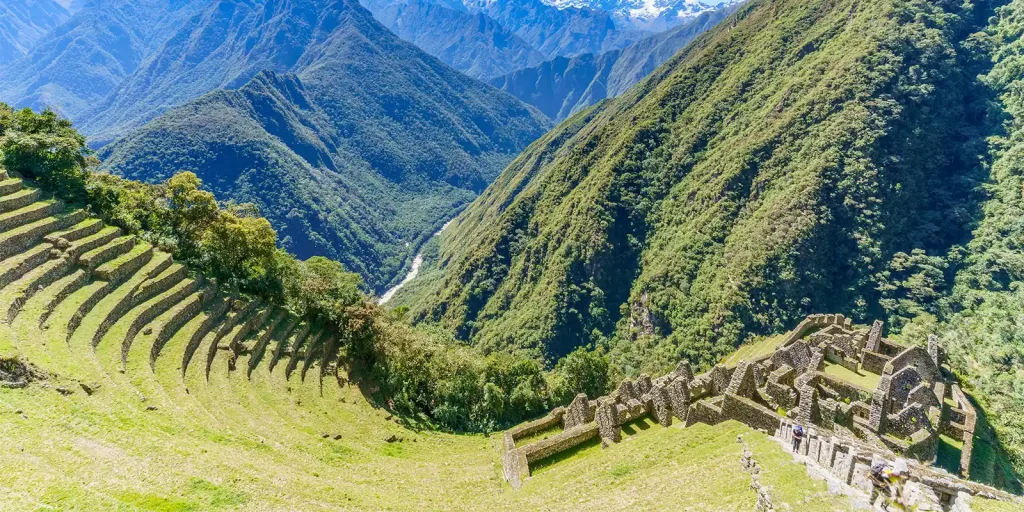
Winay Wayna Inca Ruins is 2 650m/ 8 694ft above sea level, about 3.3miles (4.7 Km) southeast of Machu Picchu. It´s located between the ruins of Phuyumatamanca and the Sun Gate. Perched on a mountain slope and from afar it gives the illusion that its floating in the clouds. Because its so close to the high jungle, the climate tends to be warm and humid in the day, with temperate nights. The humid weather brings with it lots of mosquitos and they will bite you mercilessly. We recommend you bring strong insect repellent.
The construction and use of Wiñay Wayna Inca ruins
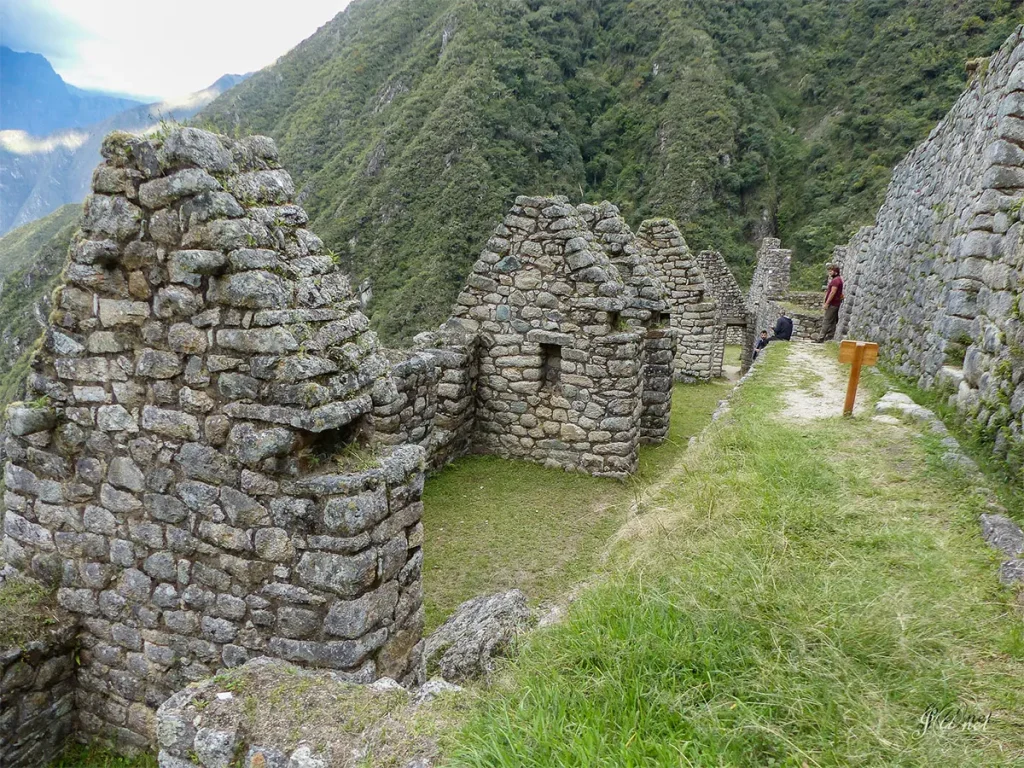
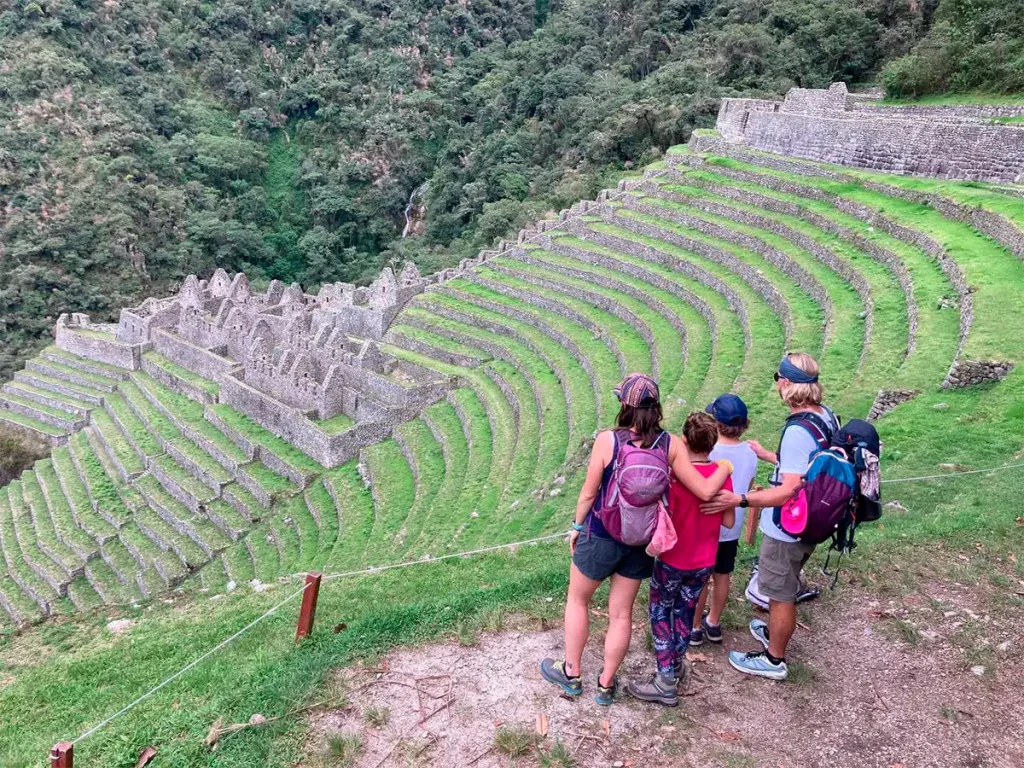
The construction of this magnificent site is pure genius, the stone placement is immaculate, blending with nature and respecting the ecology. The architectural style is very similar to that of Machu Picchu. It´s made of two platforms, separated by 16 Inca terraces. Each platform has temples, religious rooms, ceremonial water fountains. The 7-window temple in honor the Rainbow God: Cuychi.
There are three theories regarding the use of this Archeological site. First, it could have been used as a spiritual center. The water fountains give weight to this theory because the ancient Incas respected and performed many rituals to mother nature. Machu Picchu is known for only accepting nobility and the elite from the empire. Within its walls and it therefore makes sense for them to need a place to rest and perform rituals before entering the holy site of Machu Picchu. Another theory, it was a food warehouse or Tambo. Used to store produce harvested nearby and then later redistributed to nearby communities like Sayaqmara,Intipata, Conchamara and Phuyupatamara. The most prevalent theory, it was an administrative center for the city of Machu Picchu because of its location and design. When you see the structure of the building in person this makes the most sense. The enclosures could have been used to store crops. The water baths to perform rituals on the way to the Inca city.
How to get to Wiñaywayna Inca Ruins?
The site is protected by the Peruvian government and therefore highly regulated. The only possible way to see this site is to hike the Short Inca Trail or any other Inca Trail hike variation. Once you arrive at the top of this Archeological site the most panoramic and spectacular views of the trek will welcome you. From here you get unobstructed views of the Urubamba Valley, the train tracks and train, snow-capped mountain peaks like Mt Veronica and the Vilcanota River gently flowing down stream. Click below for a trek leading to Winay Wayna:
The Campsite of Wiñay Wayna
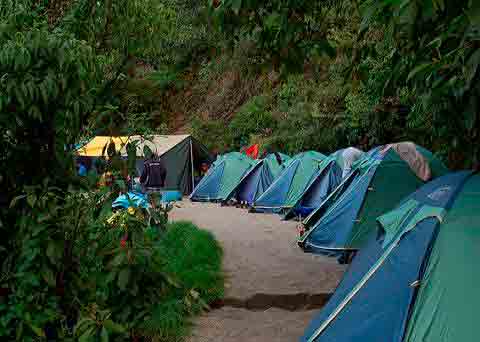
Just above the Archeological site is a campsite that shares the same name. It´s the last campsite before reaching the Majestic Machu Picchu. Its at an elevation of 3 680m/ 12 074ft a gradual walk to Sun Gate, where you will get your first full jaw dropping view of Machu Picchu. It’s a safe campsite in the middle of retaining walls and rest rooms, providing a place to get a good shower before approaching the Citadel. On the short Inca trail its used as a rest stop to grab some lunch, use the restroom and take pictures of the stunning landscape that envelopes you.
FAQS
What is Wiñay Wayna and why is it important?
Wiñay Wayna is one of the most significant archaeological sites along the Inca Trail, located shortly before Machu Picchu. It features a combination of agricultural terraces, ceremonial fountains, and residential structures built into a steep mountainside.
Its importance lies in its strategic role within the Inca road system, likely serving as a resting point (tambo), ceremonial center, or checkpoint for travelers approaching Machu Picchu.
What does “Wiñay Wayna” mean?
“Wiñay Wayna” comes from the Quechua language and translates to “Forever Young.”
The name is believed to reference the orchids that bloom year-round in the area, symbolizing constant renewal and the enduring beauty of the site.
Where is Wiñay Wayna located and what is its altitude?
Wiñay Wayna is located on the Inca Trail, approximately 10 km (6 miles) from Machu Picchu, overlooking the Urubamba River.
It sits at an altitude of about 2,650 meters (8,700 feet), in a lush cloud forest environment where the Andes begin to transition into the Amazon basin.
Can you visit Wiñay Wayna without hiking the Inca Trail?
No, Wiñay Wayna is only accessible via the Inca Trail.
There is no road or train access to the site, which helps preserve its authenticity and limits the number of visitors compared to Machu Picchu.
When do you visit Wiñay Wayna during the Inca Trail trek?
On the Classic 4-day Inca Trail, Wiñay Wayna is typically visited on Day 3, usually in the afternoon before reaching the nearby campsite.
It is considered the final major archaeological highlight before the last hike to Inti Punku (Sun Gate) and the first panoramic view of Machu Picchu the following morning.