


One day trip Sacred Valley
The trip is Sacred Valley, the daily trip is wonderful, the guide Grobert and the driver are nice. We enjoyed the full trip.
From $997.00 / Person
This 7-day adventure package takes you through the very best of the Cusco region of Peru: the Inca capital, the Sacred Valley, the legendary Inca Trail, and Rainbow Mountain, with the iconic citadel of Machu Picchu as its crowning moment. After arriving in Cusco, you will travel through the Sacred Valley of the Incas, a landscape filled with remarkable ancient sites and lively market towns. Then set out on the world-famous 4-day Inca Trail, crossing spectacular Andean mountains, passing snowcapped summits and hidden Inca ruins, and winding through cloud forests bursting with colorful wildflowers. Reach the Sun Gate and make your way down to Machu Picchu for an in-depth guided tour of the citadel. On your final day, head south of Cusco to hike to the extraordinary natural wonder of Rainbow Mountain before returning to the city.
Trip Details
When you land in Cusco, a member of our team will be waiting to welcome you and take you to your hotel. After a short briefing about your trip, the rest of the morning is yours to rest and let your body adjust to the altitude.
In the afternoon, explore Cusco at your own pace and discover how Inca stonework and Spanish colonial architecture blend together in the former capital of the Inca Empire. In the evening, enjoy the city’s lively atmosphere and try some local dishes at one of its many traditional Peruvian restaurants.
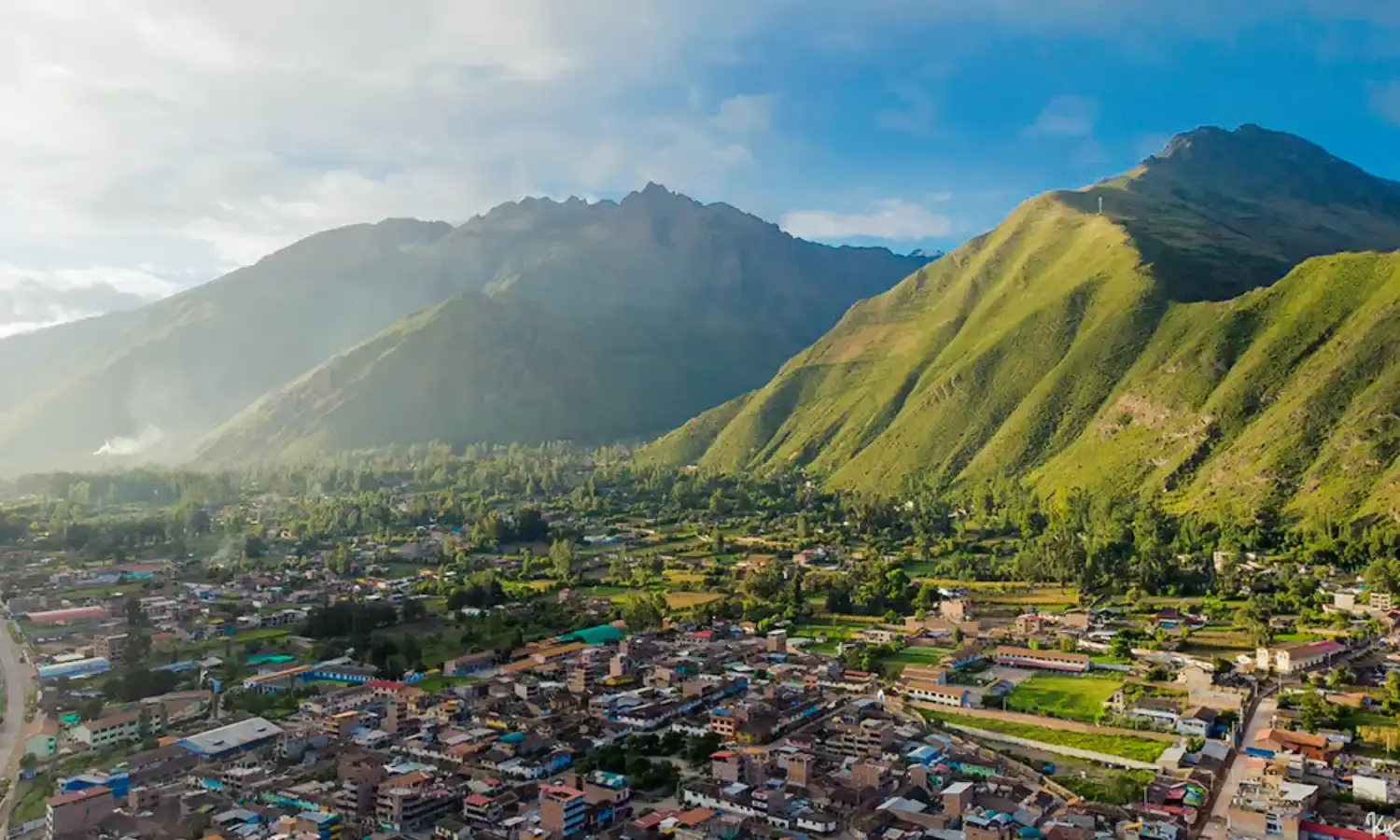
At 7:30 AM, your guide meets you at your Cusco hotel and we head out in our private van toward the Sacred Valley of the Incas. Our first stop is the Taray Viewpoint, with sweeping views over the Urubamba Valley and its farming villages, where agricultural life has changed remarkably little in five centuries. We then continue to the archaeological site of Pisac, home to an impressive Inca cemetery with over 2,000 tombs.
Over about 2 hours, you will admire the skillfully built farming terraces that climb up the mountainside, walk through an Inca tunnel, and visit the ceremonial sector of this important citadel. Afterward, we spend around 20 minutes at the colorful Pisac market before driving on to Urubamba for lunch.
Next, we visit Moray, often called the “Greenhouse of the Incas.” This remarkable site is made up of circular terraces built into a deep natural bowl, with each level enjoying its own microclimate depending on its depth. Archaeologists believe the Incas used it as an agricultural laboratory to find the best growing conditions for their crops and to experiment with new varieties.
We continue to the colonial town of Maras and look out over the Salineras, the pre-Inca salt mines. Thousands of small salt pools have been handed down from generation to generation and have been worked since before the time of the Incas. A spring high in the valley releases a trickle of extremely salty water, which is channeled into the pools and left to evaporate, leaving the salt behind. It is one of the few places on Earth where you can find naturally pink salt.
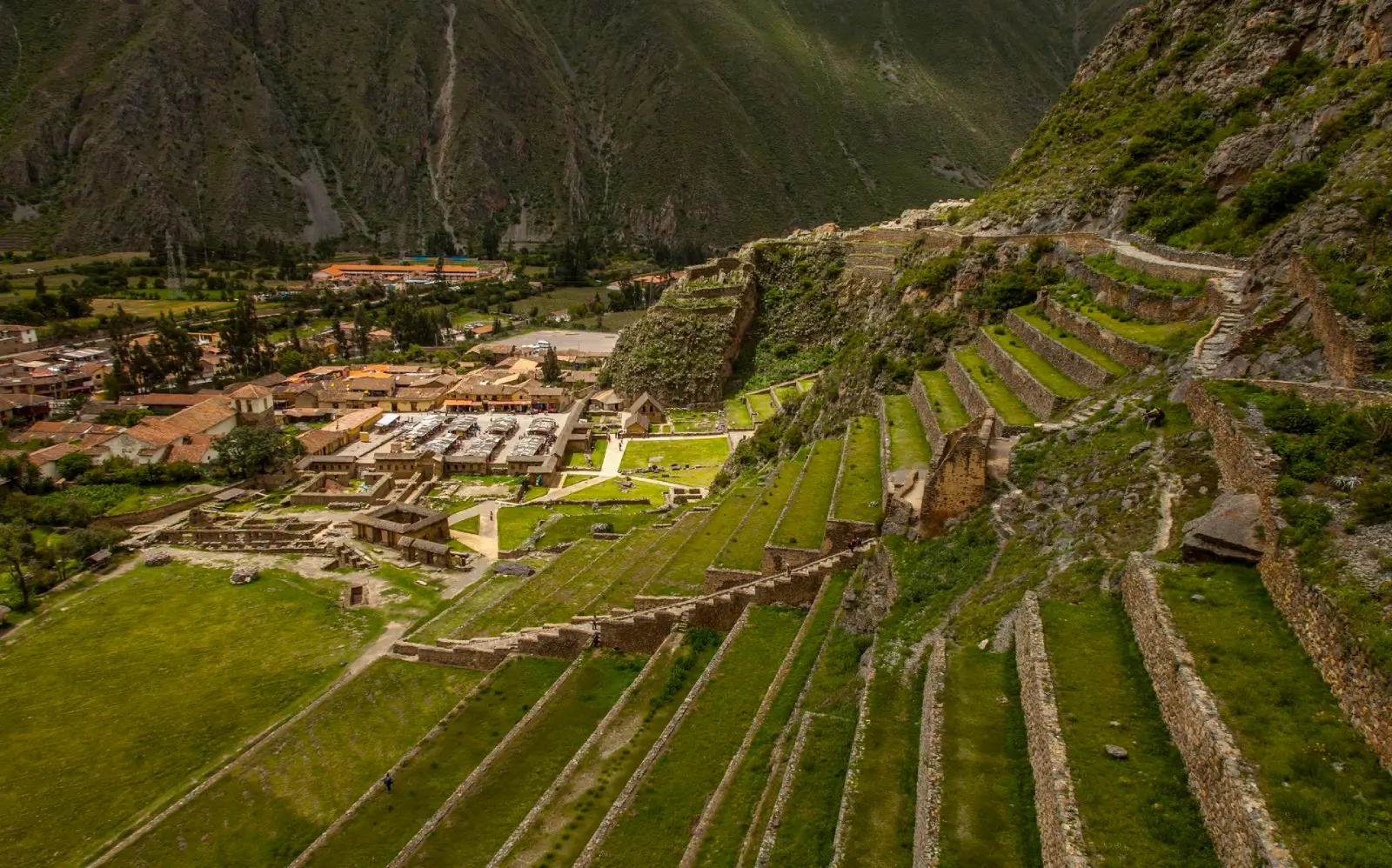
The day ends in Ollantaytambo, a village whose Inca layout has survived intact to this day. Your guide leads you through its massive ruins and up the steep terraces to the Sun Temple, explaining the key role this fortress played in the early years of the Spanish conquest. You spend the night at a hotel in Ollantaytambo, ready to begin the Inca Trail the next morning.
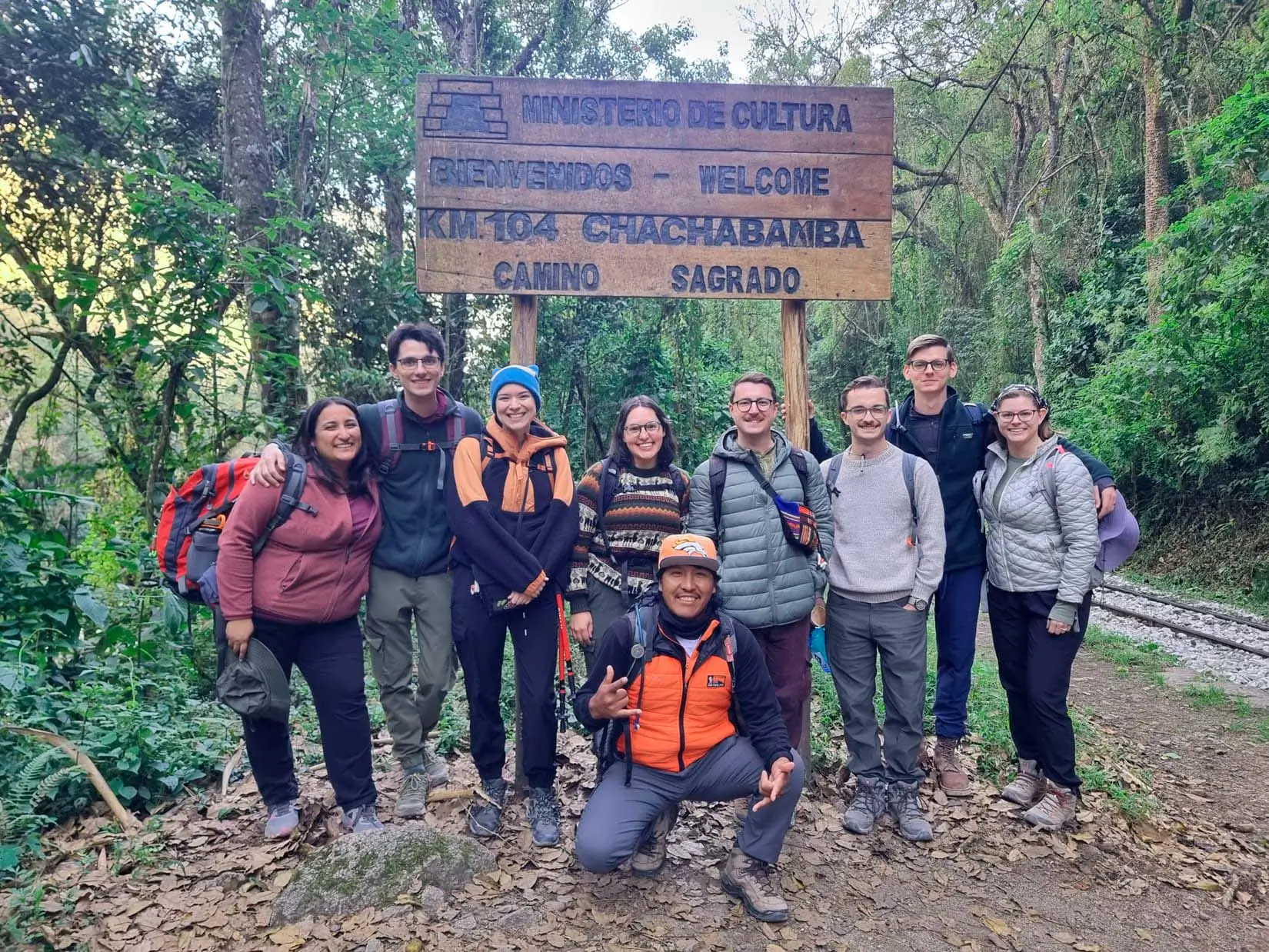
Today, the adventure of a lifetime begins: the Classic Inca Trail to Machu Picchu. Our private van collects you from your hotel at 6:00 AM and takes you to Piskacucho, better known as Kilometer 82, the official starting point of the trail. We arrive around 8:30 AM, leaving time to use the restrooms, put on sunscreen and insect repellent, and get organized. At the first checkpoint, have your entrance permit, passport, and (if you booked at a student rate) your student card ready.
From the trailhead (2,720 m / 8,923 ft), we cross the Vilcanota River and follow its course to the right. The first day is fairly easy, a warm-up along mostly flat Inca paths. Along the way, you will enjoy great views of the Huillca Raccay fortress, the vast Inca complex of Llactapata (officially named Patallacta), the Urubamba mountain range that separates the Andes from the jungle, and the snowy summit of Wakay Willca, also known as Veronica (5,860 m / 19,226 ft).
After passing the small village of Wayllabamba (3,000 m / 9,842 ft), set in a mild, green valley of the same name, a further hour and a half of walking brings us to our first campsite at Ayapata. Throughout the day, you will be surrounded by lush scenery, snowcapped peaks, and a wide variety of plants and wildlife. Night temperatures here are usually around 5°C (41°F), depending on the month.
After a wake-up call between 5:00 and 5:30 AM and a hot breakfast, we begin the steep climb to the highest point of the trail, Warmiwañusca, or Dead Woman’s Pass (4,215 m / 13,829 ft). On the way up, look out for hummingbirds and many other bird species, as well as native plants and the twisted Polylepis (Q’euña) trees of the cloud forest around 3,650 m (11,975 ft). Reaching the summit is a truly rewarding moment.
After a well-earned break at the top, we descend to Pacaymayu (3,550 m / 11,646 ft) for lunch. In the afternoon, a second steep climb of about two hours takes us to the Runkuraqay Pass, at nearly 4,000 m (13,123 ft). We reach camp at Chaquicocha by around 5:00 PM, where night temperatures fall to about 4°C (39°F).
Many trekkers consider this the most beautiful day on the trail, so keep it in mind as motivation during yesterday’s climbs. After breakfast at 6:00 AM, a gentle ascent brings us to the third pass, the third-highest point of the Inca Trail (3,680 m / 12,073 ft), with breathtaking views of mountains and deep canyons. Just a few minutes beyond lies the archaeological site of Phuyupatamarca, whose name means “Town in the Clouds.”
From there, we descend around 3,000 stone steps through the cloud forest to the impressive farming terraces of Intipata. After exploring the site, we continue to our final campsite at Wiñay Wayna (2,680 m / 8,792 ft), arriving in time for lunch after only 4 to 5 hours of walking. Nights here are milder, at around 12°C (54°F).
Just a short walk from camp lies the Inca site of Wiñay Wayna, meaning “Forever Young.” Even if your legs are tired, do not miss it: many consider it the most stunning ruin on the entire Inca Trail.
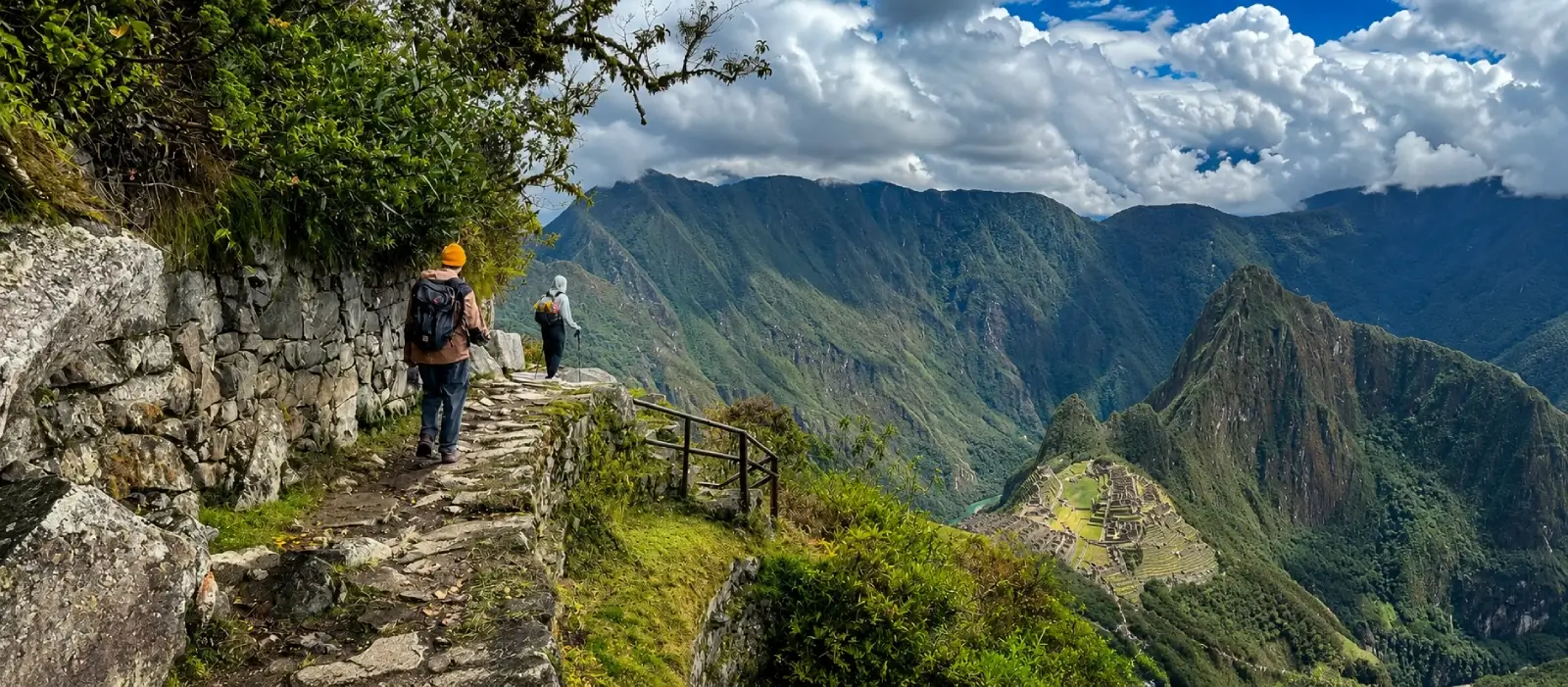
We wake at around 4:00 AM and have breakfast before the last stretch of the Inca Trail. By about 6:00 AM, we reach Inti Punku, the Sun Gate, where Machu Picchu appears below in all its splendor, much as it did for the Inca travelers who walked this same path centuries ago. From there, a 40-minute downhill walk brings us to the citadel (2,430 m / 7,972 ft), which we enter from above through the Guardhouse, the perfect spot for the classic postcard photo of Machu Picchu. We then continue to the checkpoint to register and leave our bags.
Your guide leads a complete 2-hour tour of the citadel along Circuit 3, sharing its history and explaining how Machu Picchu was organized into three sectors: agricultural, residential, and religious. Afterward, those who reserved the optional Huayna Picchu climb in advance will have free time to make the ascent on their own.
When you are ready, take the bus down to Aguas Calientes for lunch (not included). Depending on your train time, you may have a chance to shop, visit the local museum, or relax in the hot springs. The Expedition Train departs at 2:55 PM or 3:20 PM and follows the Urubamba River, which near Aguas Calientes rushes through a narrow canyon full of whitewater. Look up at the steep canyon wall and you may even spot Wiñay Wayna. At Ollantaytambo station, your driver will be waiting to take you back to your Cusco hotel in our private vehicle, arriving at around 7:00 PM.
Important to Know:
Your final adventure begins with a 4:00 AM hotel pickup. A 3-hour drive through Cusco’s South Valley, past Inca farming terraces, traditional villages, and high Andean peaks, brings you to the trailhead at Llacto (4,638 m / 15,216 ft).
After breakfast surrounded by grazing alpacas and llamas, we hike alongside a pretty stream with views of the glaciers of Mount Ausangate. Along the way, you will meet local families who keep their Quechua traditions alive, and you can learn about their traditional clothing and the meaning of the different hats worn by the men. Ask your guide to teach you a few words of Quechua.
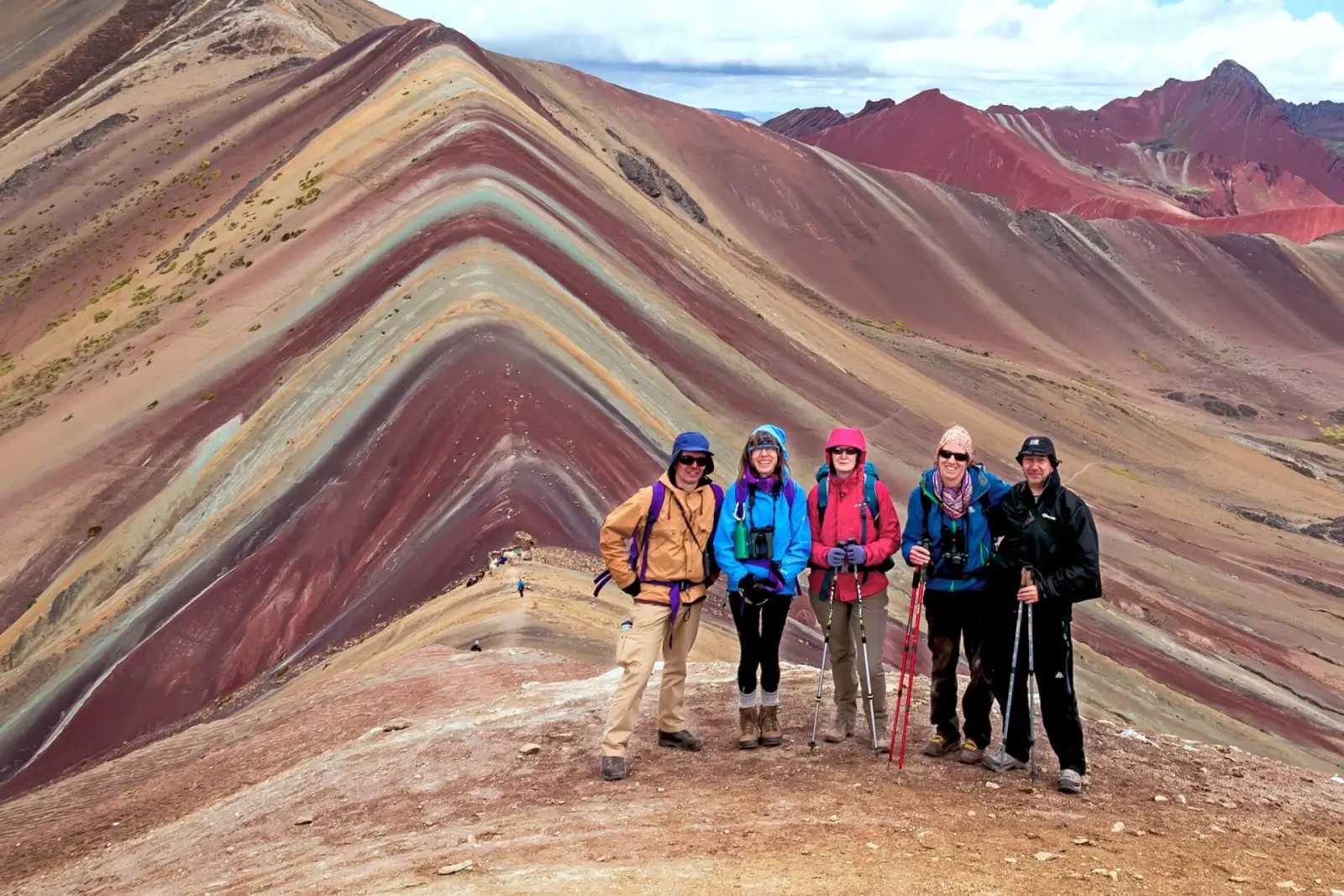
After about 1.5 hours, you reach the summit of Rainbow Mountain (5,020 m / 16,470 ft). Spend around 30 minutes at the top taking photos and soaking up the unique colors. Afterward, you can take an optional detour to the top of the Red Valley, which adds about 45 minutes to the return.
We walk back down the same trail in about 1 hour and enjoy a freshly cooked lunch prepared by our chef. A 3-hour drive then takes you back to your hotel in Cusco, arriving at around 5:00 PM.
Please note: The Huayna Picchu climb is unguided and is usually done on your own after the Machu Picchu tour. If you would like a guide to accompany you, please let us know in advance, as this service has an additional cost.
This 7-day package runs on any date you prefer, with a minimum of 2 travelers. All prices include the personal porter who carries up to 7 kg of your belongings on the Inca Trail, plus the duffel bag we provide.
| Package Option | Price per Person (USD) |
| Without Hotels | $997 USD |
| With 3-Star Hotels | $1,297 USD |
| With 4-Star Hotels | $1,397 USD |
| Extra | Price (USD) |
| Sleeping Bag | $20 |
| Air Mattress | $20 |
| Trekking Poles (whole trek) | $15 |
| Single Tent | $30 |
| Extra Night in Aguas Calientes | From $60 |
| Huayna Picchu Mountain | $75 |
| Vistadome Train | $67 |
The Huayna Picchu climb takes place inside the Machu Picchu sanctuary and does not include a guide. Most travelers do it on their own after the citadel tour. A guide can join you for an additional fee if requested in advance.
If you want to truly enjoy trekking in Peru, and especially in the Cusco region, you are in the right place. We specialize in designing original routes to Machu Picchu that you will not find with most other operators, including a wide range of Inca Trail options from 1 to 7 days. For you, that means more choice, more rewarding adventures, personal attention, and small groups that average 4 to 6 trekkers and never exceed 8.
Our approach is simple: fair prices, excellent service, and the best possible trekking experience. All you need to do is take in the incredible scenery and feel the magic of Pachamama (Mother Earth) and the Andes. We carry your gear, cook your meals, pitch your tents away from the crowded campsites, and take care of every detail so you can simply relax and enjoy the journey.
Every tour is run by our own team, and we never hand you over to another company. All departures are 100% guaranteed: once you have booked and paid your deposit, your trip is confirmed.
To give every traveler more personal attention, our groups are limited to a maximum of 8 people. This alone sets us apart from the many companies that run much larger groups.
We are very proud of our guides. They are true professionals who speak fluent English and are passionate about Inca history and heritage. They keep learning and researching so that what they share reflects accurate, well-established knowledge of Inca and Andean culture. They are also great company: friendly, fun, and well educated, with university degrees in Archaeology, Tourism, Botany, History, or Anthropology.
Every trek is fully supported by porters, so your comfort always comes first. While you connect with local people, explore incredible sites, and discover remote Inca towns, our porters carry the gear, prepare meals, and set up camp away from the busiest spots.
We provide every porter, free of charge, with a jacket, sun hat, warm hat, t-shirt, pants, hiking boots, duffel bag, water bottle, back-support belt, sleeping bag, sleeping mat, and travel insurance. Our porters come from remote highland communities, and working with us helps them improve their family income and support their children’s education. We treat every one of them like family.
We firmly believe in giving back to the communities we pass through on our treks. As part of our commitment to responsible tourism, we hire staff from these villages and support social projects that benefit them. We are proud to work closely with our highland team members and their families, helping strengthen their communities from the ground up.
We hand out a duffel bag at your briefing, and your personal porter carries it on the trail. Peruvian law limits each duffel to 7 kg (15 lbs) to protect the health of porters and pack animals, and every bag is weighed before the trek. Anything over the limit must go in your daypack. Remember that your sleeping bag (about 2 kg) and sleeping pad (about 1 kg) count toward the limit, leaving roughly 4 kg for personal items.
We recommend a small 30L to 40L backpack for daytime hiking, as large backpacks are not permitted inside Machu Picchu. Everything else stays in your duffel bag, which you will find waiting at camp.
The briefing takes place at 6:00 PM the evening before the Inca Trail begins, at our office in Cusco (Calle Garcilaso 265, Office 201).
Of course. While you are on the Inca Trail, your main luggage can stay at our office or at your hotel, whichever is easier for you. Just pack what you need for the 4 days on the trail.
Step 1: Fill out our booking form by clicking BOOK NOW. We cannot buy your Inca Trail permit without the following details for every traveler in your group:
Step 2: Pay a deposit of $316 USD per person so we can purchase your Inca Trail permit. You can pay by VISA or PayPal directly on our booking page.
You can pay in cash in Cusco or online. To avoid Peru’s high card fees, pay in cash (US dollars or Peruvian soles) at our office in Cusco; there are plenty of ATMs in the historic center. You can also pay online by VISA or PayPal, which adds a 5.5% service fee charged by those platforms.
Travelers under 18 on the date of the trek, and university students with a valid card. Under Peruvian law, age is counted on the day you visit Machu Picchu, not the day you book. For example, if you book at 17 but turn 18 before the trek, you will need a valid university card to get the discount.
To receive any student discount, please send us a copy of the passport when you book.
Unfortunately, no. Once your Inca Trail permits have been bought, the Peruvian government does not allow any changes. Permits cannot be transferred or refunded, and if you cancel your trip, the deposit is non-refundable.
Yes. You must bring your original passport, and it has to be the same one you used to book your Inca Trail permit. Park rangers check it every day on the trail and at the Machu Picchu entrance, and the train company checks it before boarding. If you are renewing your passport, book with your old one to secure the permit and send us a copy of the new one as soon as you have it so we can update your details.
Very changeable. Mountain weather is hard to predict, and as the trail passes through many different microclimates, conditions vary from place to place. Dress in layers and always keep good rain gear in your daypack.
Stay active before your trip and give yourself time to acclimatize. People who exercise regularly and spend a couple of days in Cusco or the Sacred Valley first usually adapt better. The best remedies are plenty of water, coca tea, and oxygen if needed. Our guides are trained to recognize and treat altitude sickness. This package already includes two days in Cusco and the Sacred Valley before the trek, and you can also add a Cusco City Tour while you acclimatize.
A maximum of 8. Most of our groups have between 2 and 6 people. We specialize in small and private groups, so you always receive personal attention.
Each group has 1 cook, and the number of porters depends on the group size:
Your porter carries a 7 kg (15 lbs) duffel bag, and you carry a small daypack. We give you the duffel the evening before the trek. By Peruvian law, it cannot weigh more than 7 kg, a limit that protects the health of porters and animals, and all bags are weighed. Your sleeping bag (about 2 kg) and sleeping pad (about 1 kg) are included in that weight, leaving around 4 kg for your own things. Anything extra must go in your daypack.
Keep in mind that porters always walk ahead of the group, so you will not be able to reach your duffel until you arrive at camp each evening. Your daypack should hold everything you need during the day, such as a warm jacket, rain jacket, camera, sunscreen, snacks, and water. A 30L to 40L backpack is usually enough.
The Inca Trail is fairly demanding and requires a moderate level of fitness. The route covers 42 km (26 miles) through the Andes, reaching a high point of 4,215 m (13,829 ft) at Dead Woman’s Pass. On the second trekking day, you climb over two high passes. To prepare, try walking around 15 km in a day or train at the gym in the months before your trip. Good acclimatization is just as important, so plan to spend at least 2 or 3 days in Cusco (3,350 m / 11,047 ft) before starting the trail.
Yes, we bring our own private toilet. Our travelers really appreciate this: a clean camping toilet with a proper seat, set up inside its own tent at a comfortable distance from the campsite. At night, it is always close by and hygienic, unlike the public facilities along the trail.
Our team will help you get to safety. If a health problem prevents you from continuing, we will help you reach the nearest town and arrange transport. We always carry oxygen for breathing difficulties. In serious emergencies, a helicopter evacuation can be arranged at your own cost, so travel insurance is required. No refunds are given if you cannot complete the trail.
Trekkers who leave the trail are usually taken to Ollantaytambo. If they recover quickly, they can continue to Aguas Calientes (at their own expense) and still visit Machu Picchu as planned.
Absolutely. Hotel drop-off is included at the end of every trek and tour. If you are staying in the Sacred Valley, for example in Ollantaytambo or Urubamba, we will take you there instead.
Usually at 2:55 PM or 3:20 PM, depending on availability. We choose these times to give you as long as possible at Machu Picchu while still letting you enjoy the views from the train on the way back.
$67 USD per person. The Vistadome offers more comfortable seats, panoramic side and ceiling windows, snacks, and a live dance show on board. It runs from Aguas Calientes to Poroy station, where our driver picks you up for the 25-minute ride to Cusco. Please request the upgrade in advance.
Tipping is optional, but it means a lot to the team. Even if it is not common in your country, tips are an important part of the tourism industry in Peru and reward the people who look after you on the trail. How much you give is entirely up to you and should reflect the quality of the service and the length of your trip.
Yes. We are a local, responsible tourism operator committed to two key principles: protecting the environment and benefiting local communities while respecting their culture and beliefs. All our staff are trained to understand and respect the places we visit and the people who live there.
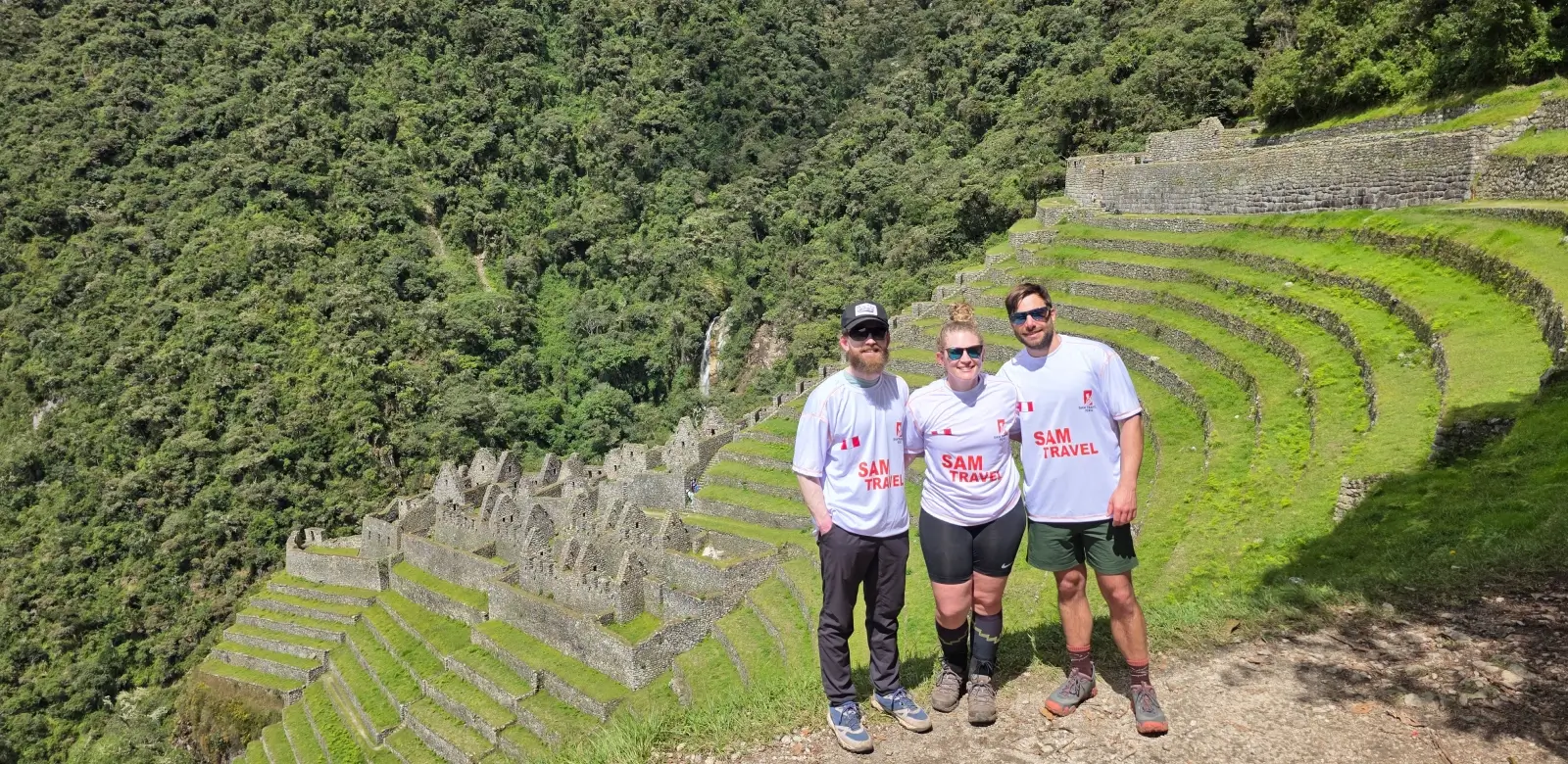
From the terraces of Wiñay Wayna to the Sun Gate, every step brings you closer to the lost city of the Incas.

Its agricultural terraces cover half the mountainside, making it a trail favorite. Its name means "Eternally Young" in Quechua.

The "Gate of the Sun" was the main entrance to Machu Picchu and gives you your first view of the citadel, a view you can only earn on the Inca Trail.
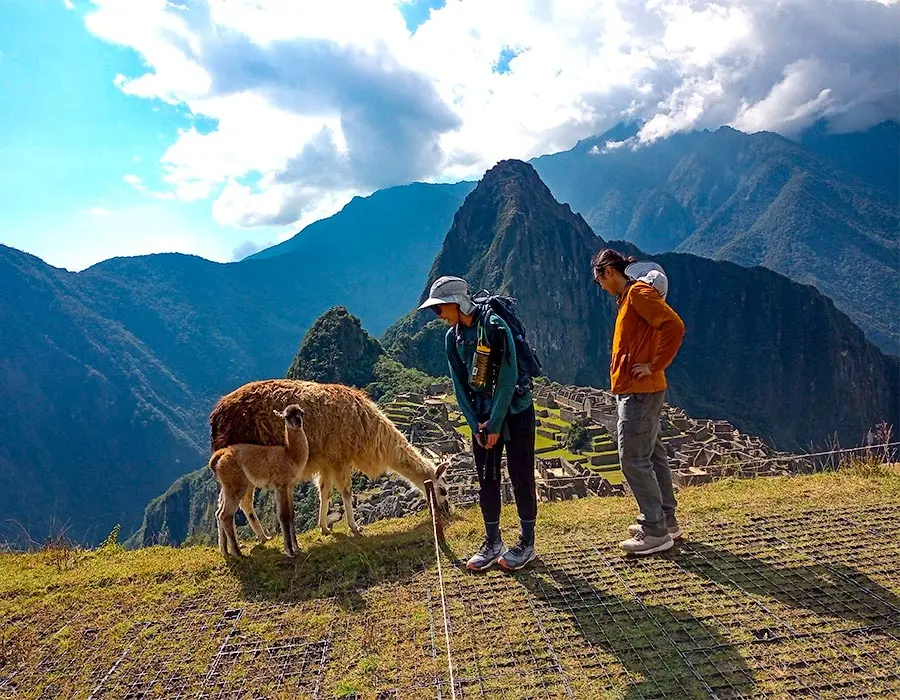
By far the most well known UNESCO world heritage site in Peru and the pinnacle of many people's visits to South America. This is where you wanted to be.
Real reviews from travelers who explored Machu Picchu and Cusco with us, straight from Tripadvisor, Google and Trustpilot.
The trip is Sacred Valley, the daily trip is wonderful, the guide Grobert and the driver are nice. We enjoyed the full trip.

I had the best experience with Sam travels, we had an amazing time doing the 4d Salkantay trek, we had the best weather. Specifically want to mention Josep what an amazing cool guy he was. A real leader, great story teller, motivator and made you feel like you were taking on something special. Secondly another special mention for Andres and his catering team. The food was amazing, real nutritious and energising for the long trekking days.
Finally the horse man Donato, he managed to get all of our fresh clothing to the next camp very efficiently. Highly recommend a trip with this company.
We did the 2-day Short Inca Trail and it was a fantastic experience! Our guide, Fredy Zapata, was excellent. He told us so much about the history of the Incas and the region, and was able to answer every question we had. He did a great job and made the whole experience really enjoyable.
The highlight was definitely arriving at the Sun Gate and seeing Machu Picchu for the first time. An unforgettable experience that we would highly recommend!

Amazing trip! What a great experience, so well organized. Our guide Josep was a guiding star who knows so much and shared a lot of information. Very kind and helpful in every way. The cooking team of Andres was amazing and we had wonderful and a great variety of meals every evening. Donato the horseman made sure we got our stuff safe and in time to every stop. I could not ask for a better experience to be honest. Especially Josep, thank you for being so flexible, organized and sharing your knowledge.
We did the Salkantay Trek with SAM Travel and couldn’t have been happier with our choice! Our guide, Josep, was incredibly friendly, knowledgeable and passionate. He answered every single one of our questions about nature, history and Peruvian culture honestly, even better than ChatGPT! ;) We especially loved being in such a small group. It made the whole experience feel much more personal, relaxed and authentic.. The accommodations throughout the trek were excellent, and the food prepared by Andrés was absolutely outstanding. We were honestly surprised by the quality and variety of the meals, especially considering we were in the middle of the mountains. We spent a long time researching different companies before booking the Salkantay Trek, and choosing SAM Travel was definitely the right decision. Everything was extremely well organized, and the entire experience exceeded our expectations. We would 100% recommend SAM Travel, and especially Josep and Andrés, to anyone planning to do the Salkantay Trek!

Great trip. Great people. Loved my time with Joseph, Andres, Donato.and Elvis. Amazing world to explore made extra special with great people. Shout to my fellow travellers

It was amazing. We had the best Guide with Josep who is Sperling really good English and explaining so many things to us as well as introducing us perfectly to the altitude and the landscape. The Pick Up, accomodation and especially the food was so well organized and delicious. I highly recommend doing this trek, it was spectacular. 😍

We had an amazing experience on the 4 day/3 night Salkantay Trek with Sam Travel Peru. Everything was seamless from beginning to end.…

I joined the 2-day, 1-night tour to Cusco and Machu Picchu with SAM TRAVEL, and it was an amazing experience from start to finish.…

We had an incredible time on the 3D/2N Sacred Valley and Machu Picchu tour and would highly recommend it. It was fantastic to visit some of the highlights of the Sacred Valley, including Pisac, the Maras Salt Mines and Moray on the first…

We did the 4-day Inca Trail with Sam's Travel, and it was an absolutely unforgettable experience. It's something we will cherish for the rest of our lives.…

We had a great time on our 3d/2n tour of the sacred valley and short inca trail. The sacred valley prepared us very well for Macchu Picchu and the information provided was great. Our guide Rolando was very knowledgeable about the inca…

We’ve just done the 4-Days Inca trail with SAM travel. Our main guide Josep was very professional, knowledgeable and considerate. He really made sure that we enjoy the journey and our needs are addressed. Jimmy, our assistant guide, helped…

We had a great experience with Sam Travel Peru. Always felt well taken care of and safe. Our guide, Israel, was friendly, knowledgeable, and helpful. The office staff were always quick to reply to emails.…

Awesome trip with Josef as our guide Mario the chef with amazing food and porters who were our hero’s.

We booked a day tour for the Rainbow Mountain and it had been just perfect. Fernando, our guide, was really kind and attentive. All the staff is professional and friendly, totally recommended!

We recently completed the Salkantay Trail trek with Sam Travel, and we couldn't be happier with our experience. Our guide, Jhordy, was exceptional. He was highly professional, providing great insights, facts, and stories that enriched our journey. Jhordy was very patient with us and demonstrated remarkable flexibility, adjusting the itinerary when we weren't feeling our best. We highly recommend Sam Travel, especially Jhordy, for making our trek an incredible time.
We couldn't make this impact without our partners. Join us in changing lives.