
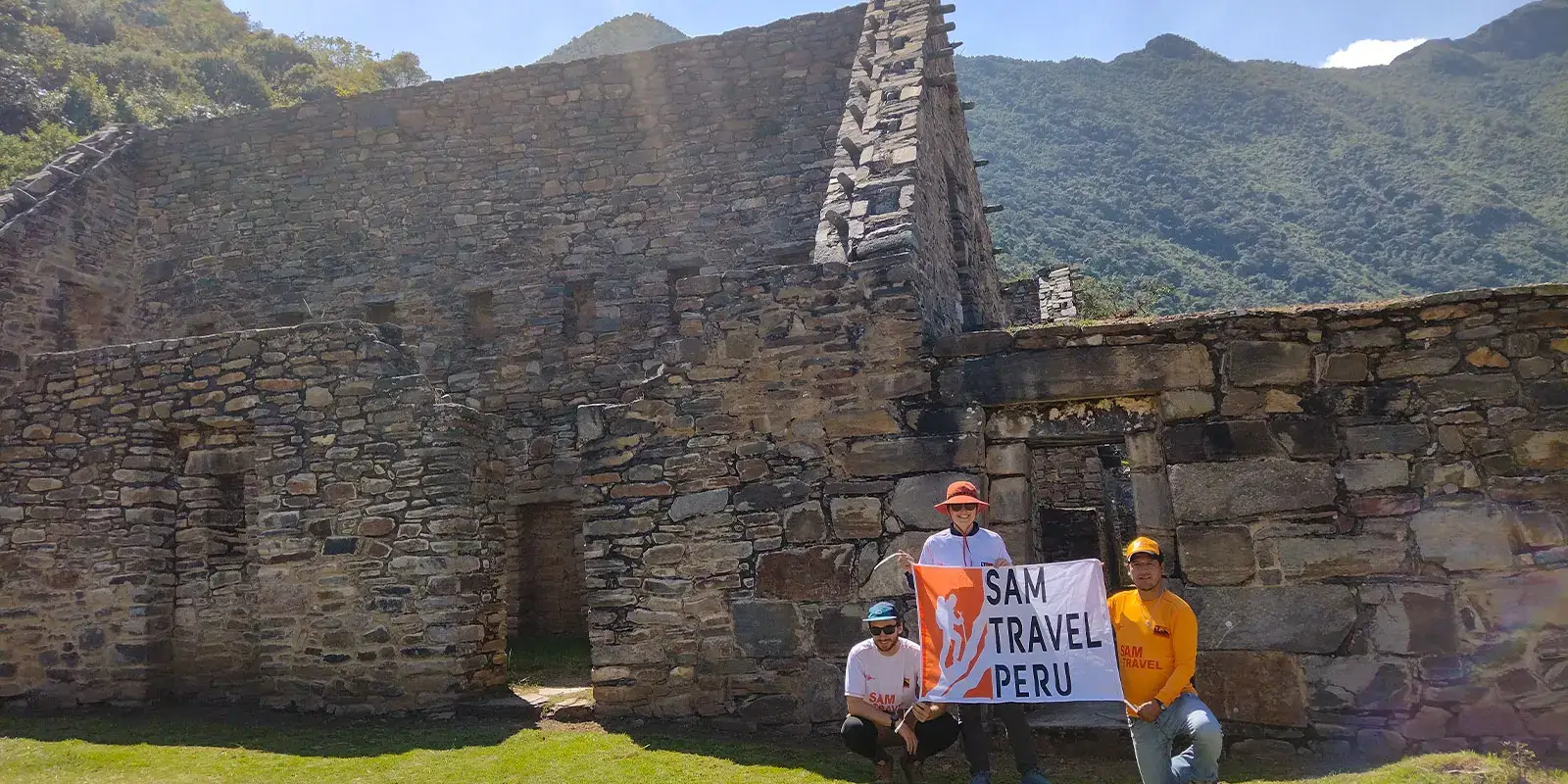

One day trip Sacred Valley
The trip is Sacred Valley, the daily trip is wonderful, the guide Grobert and the driver are nice. We enjoyed the full trip.
From $650.00 / Person
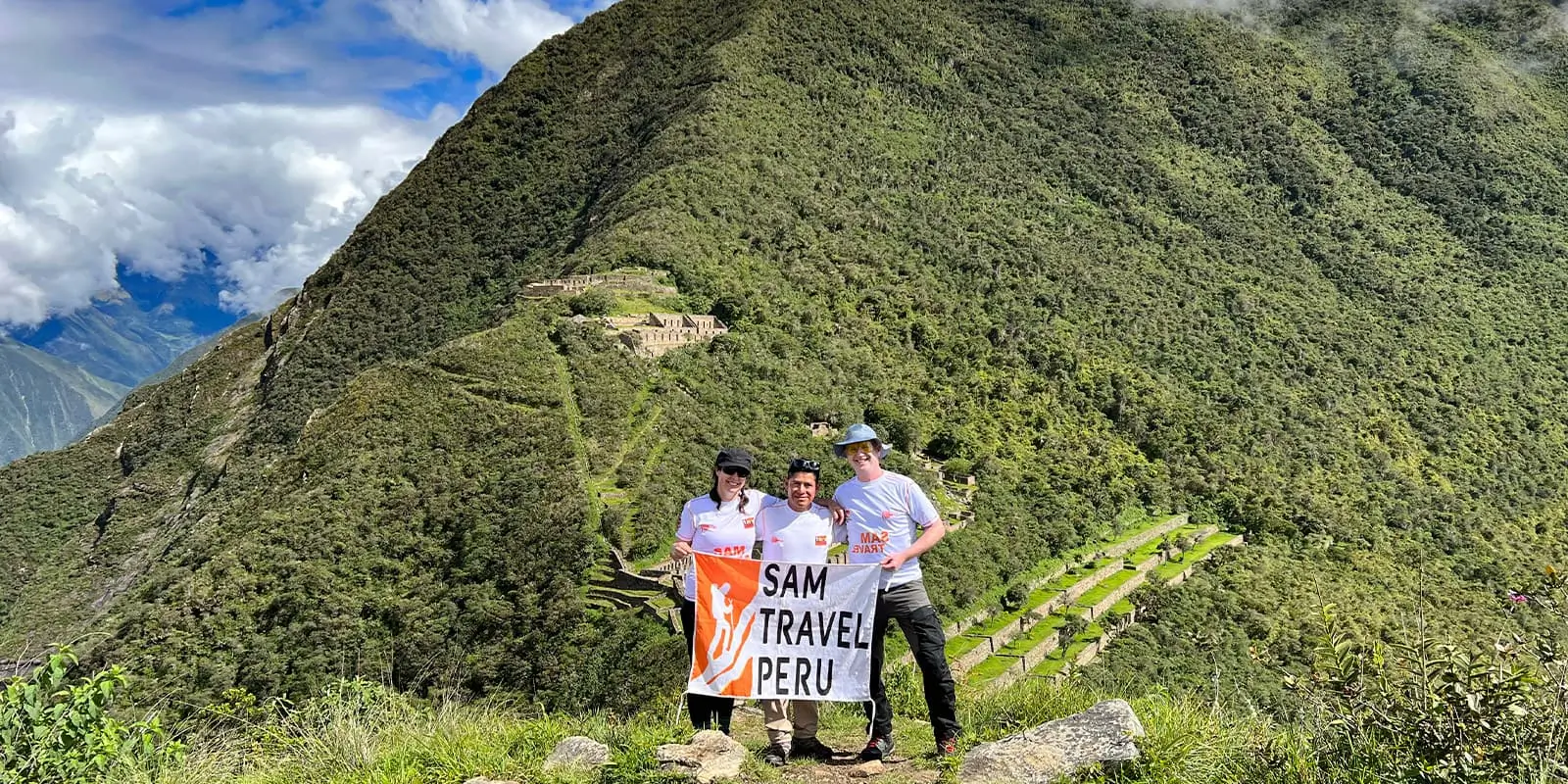
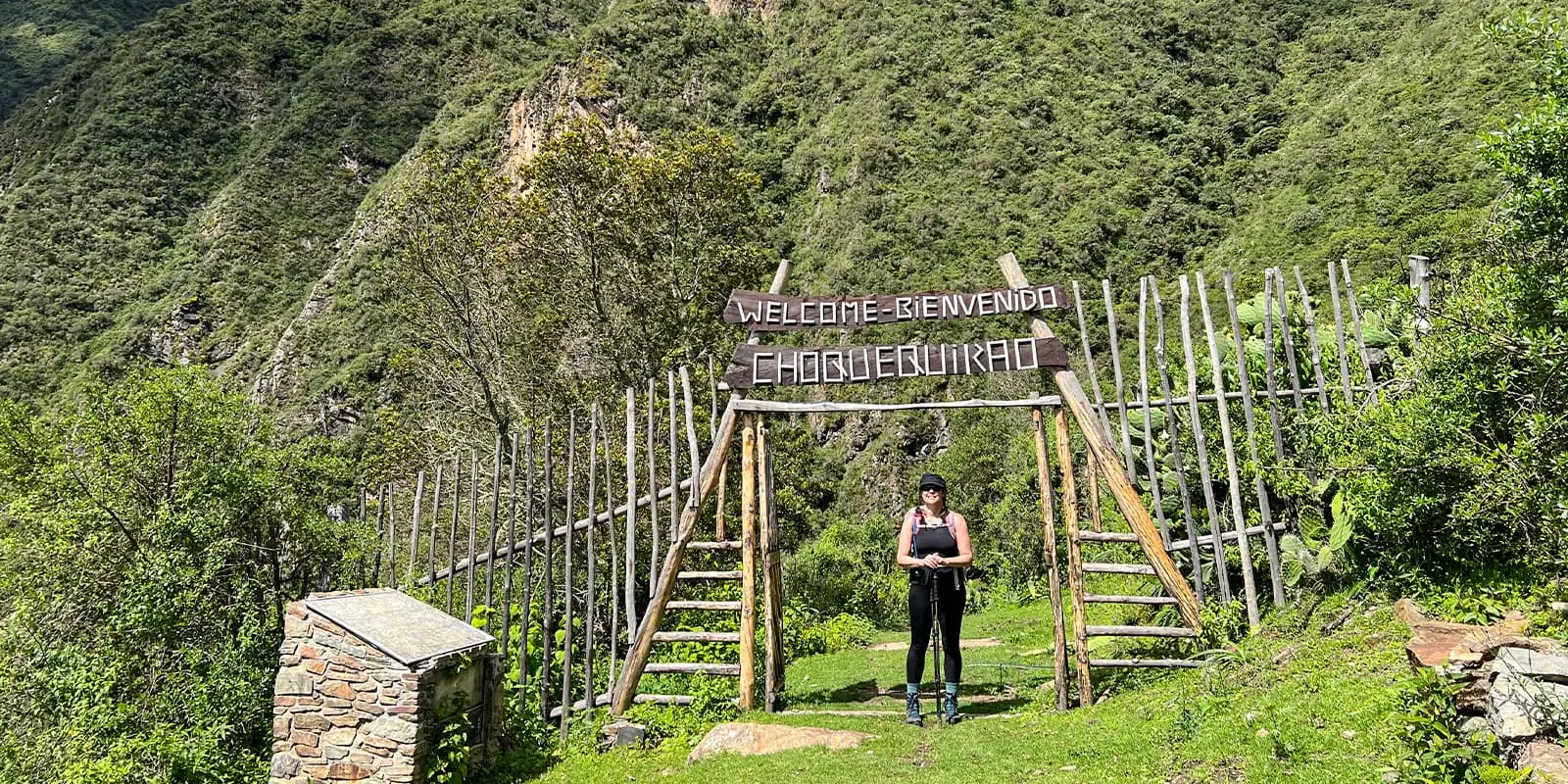
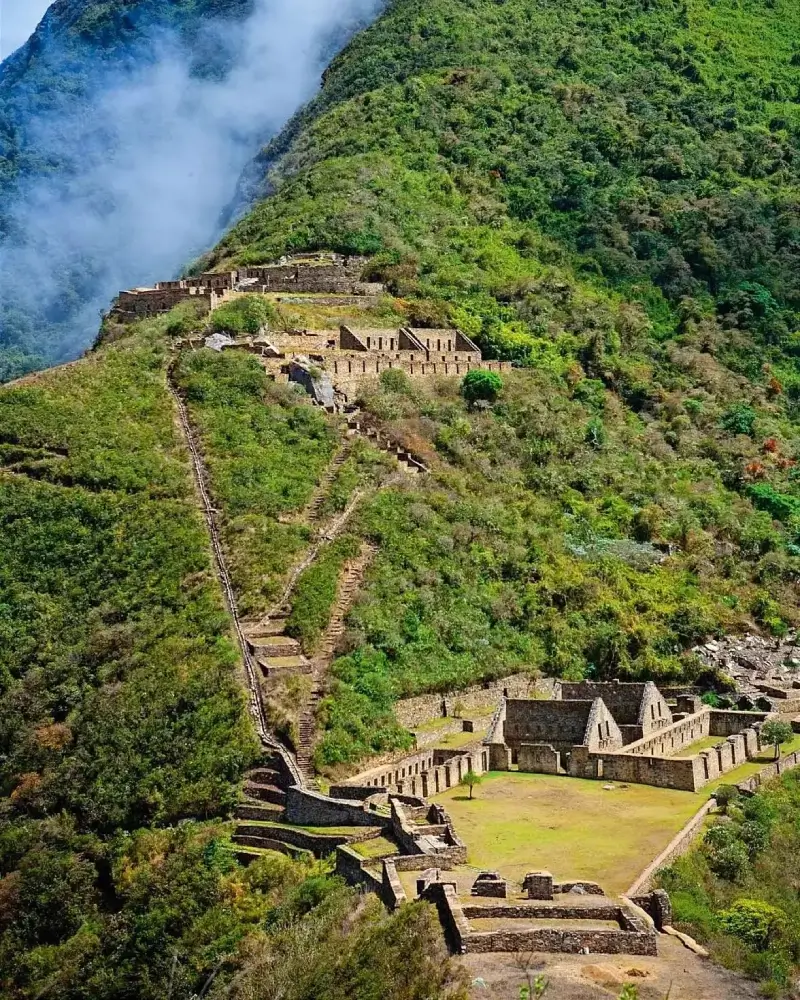
Discover one of Peru’s most spectacular and unspoiled trekking routes on the 5-Day Choquequirao Trek. Hidden deep within the rugged Apurímac Canyon, this journey takes you to the legendary citadel often called the “sister city” of Machu Picchu. Clinging to a mountain ridge high above the thundering Apurímac River, Choquequirao (Quechua for “Cradle of Gold”) covers an area three times the size of Machu Picchu, and yet only around 30% of it has been uncovered. With no road or train leading to the site, the only way in is on foot, so just a small number of travelers make it here each year. The result is a genuine, crowd-free experience among sacred temples, royal palaces, deep stone water channels, and enormous farming terraces.
Guided by experienced local experts and backed by a committed team of mountain chefs and horsemen, this 5-day adventure combines tough canyon ascents with fascinating Inca history, ever-changing microclimates, and sweeping Andean scenery. Our crew takes care of pitching camp and preparing every meal, and pack horses carry up to 8 kg (16 lbs) of your personal belongings. Because you camp right below the archaeological complex, you get rare, uninterrupted views of sunrise and sunset over the ancient stone ruins.
Trip Details
Our team collects you from your Cusco hotel at 4:00 AM for a 3-hour private drive across the Andean highlands to Capuliyoc (3,200 m / 10,499 ft), where the trail officially starts. This is where you meet the rest of your crew: the horsemen, their pack horses, and your mountain chef. Breakfast is cooked fresh on the spot, followed by a short safety talk while you get your first look at the snowy summit of Padreyoc and the plunging Apurímac Canyon below.
From the viewpoint, a zigzagging path drops for 3 hours into the canyon. With every switchback the air grows warmer and the vegetation changes around you. Your chef serves a hot lunch along the way, and then another 3 hours of downhill walking bring you to the valley floor and La Playa campsite (1,800 m / 5,905 ft), where your tent is already pitched and waiting.
Today brings the toughest ascent of the entire trek, so we set off right after an early breakfast. A footbridge carries you over the Apurímac River, and from there the trail climbs without a break for about 4 hours up a long series of steep switchbacks. As you gain height, valley scrub gradually gives way to sugarcane fields and, higher still, to misty cloud forest.
You reach the small village of Marampata (3,350 m / 10,990 ft) around midday, just in time to refuel with a hearty lunch while the whole canyon stretches out beneath you.
The afternoon section is much kinder, a gradual 2-hour trail that contours toward Choquequirao. Little by little, the stone walls and terraces of the citadel start to appear between the trees on the slopes ahead. Tonight’s camp sits just beneath the ruins, and if you still have energy, an optional 30-minute walk lets you watch the sunset over the ancient site.
The whole day belongs to the vast Choquequirao Archaeological Complex, located just a short walk from camp. Your guide brings the city’s history to life as you move through the Upper and Lower Plazas, the royal residences, the old storehouses, the water fountains, and the astronomical shrines used by the Incas.
After a hot lunch and a midday break back at camp, the afternoon is devoted to the famous Llama Terraces. Built into a steep slope below the main plaza, these farming terraces display 29 llama figures made of white quartz set into the dark stone walls. The visit wraps up on the Usno, an elevated ceremonial platform, where you watch the sun sink behind the surrounding peaks before returning to camp for dinner.
We start the return leg by following the canyon edge back to Marampata, with soft morning light spilling across the valley. From there, a 4-hour descent takes you all the way down to the river at La Playa. We strongly advise using trekking poles on this stretch, as they take pressure off your knees and help you keep your footing.
On the way down, we pause to sample fresh fruit grown by the families who live in the canyon. After a hot lunch at La Playa, we cross the river and hike uphill for 2 to 3 hours to Chikiska Camp (1,900 m / 6,233 ft), set on a quiet family homestead in the valley. It is a lovely place for birdwatching, and on clear nights the sky fills with stars, a fitting end to your last evening on the trail.
Your last day starts early with a 4-hour climb up and out of the canyon to the Capuliyoc viewpoint. Reaching the top is a proud moment: from here you can look back over the immense canyon you have crossed on foot over the past four days.
To celebrate the end of the expedition, we share a farewell lunch with your guide, chef, and horsemen. Your private vehicle then drives you 3 hours back to Cusco, passing through the farming town of Curahuasi along the way. You will be dropped off at your hotel at around 6:00 PM.
The 5-Day Choquequirao Trek departs on any date you choose, with a minimum of 2 trekkers. All prices are per person in US dollars, and the rate goes down as your group gets bigger.
| Group Size | Price per Person (USD) | Service Type |
| 2 to 3 Trekkers | $650 USD | All-inclusive small group / private departure |
| 4 to 5 Trekkers | $600 USD | All-inclusive small group / private departure |
| 6 or More Trekkers (Best Value) | $550 USD | All-inclusive small group / private departure |
| Item | Rate (USD) | Details |
| Four-Season Down Sleeping Bag | $20 per person | Rated to -15°C / 5°F, supplied with a clean, freshly washed sheet liner |
| Therm-a-Rest Inflatable Air Mattress | $15 per person | 3-inch inflatable pad for extra comfort and warmth at night |
| Trekking Poles | $15 per pair | Adjustable Black Diamond poles fitted with rubber tips |
| Single Tent Supplement | $30 total | Your own 4-person Eureka tent, ideal for solo travelers |
Choquequirao is one of the most remote and least-visited Inca sites in Peru, and reaching it on foot takes planning, experience, and a reliable team. Our local crew has the know-how to make this demanding canyon expedition safe, comfortable, and truly memorable.
Flexible Departures on Your Dates: There are no fixed group calendars. You pick the start date, and we run the trek with as few as 2 trekkers, so your group travels at its own pace.
Highly Qualified Local Guides: Our guides were born in the region, speak fluent English, and hold university degrees in Tourism and History. They are also trained in mountain safety and high-altitude emergency care.
Camping with Extra Comfort: Every pair of trekkers gets a spacious 4-person all-weather tent, and our group travels with its own private toilet tents, a dining tent, and a full camp kitchen.
Safety on Every Departure: Each group carries a first-aid kit, emergency oxygen, and satellite communication equipment, and an extra riding horse is always on hand for tired legs.
Responsible, Community-Based Tourism: We follow Leave No Trace principles, pay fair wages to our chefs and horsemen, and buy fresh produce directly from Andean farming families.
Temperatures shift dramatically between the hot canyon floor and the chilly upper campsites, so a layered clothing system is the key to staying comfortable. At your pre-trek briefing you will receive an 8 kg (16 lbs) duffel bag for extra clothes and gear, which our pack horses carry from camp to camp.
Yes, the Choquequirao Trek is classed as challenging. It is not a gentle valley walk: the route is defined by huge changes in elevation. On Day 1 you descend roughly 1,400 meters (4,600 ft) into the Apurímac Canyon, and on Day 2 you face a steep, 4-hour switchback climb up to Marampata. You should be in good physical shape, have solid cardiovascular endurance, and ideally some previous hiking experience.
The highest points of the trek are Marampata and the Choquequirao campsite, at about 3,350 meters (10,990 ft). That is lower than the Inca Trail or the Salkantay Pass, but the steep climbs can still bring on altitude symptoms. We suggest spending 2 to 3 days in Cusco (3,400 m / 11,150 ft) or the Sacred Valley before the trek to acclimatize. Stay well hydrated, drink coca tea, keep your meals light, and talk to your doctor about altitude medication such as Diamox. Every departure carries emergency oxygen.
Yes. Airport pickup is complimentary for all confirmed guests landing at Alejandro Velasco Astete International Airport (CUZ) in Cusco. Just send us your full flight information at least 14 days before you arrive. A member of our team will be waiting outside the terminal with a Short Inca Trail Machu Picchu sign and will take you straight to your hotel.
The briefing starts at 6:00 PM the evening before your trek. It takes place either at our office in central Cusco (Calle Garcilaso 265, Office 201) or at your hotel. Your guide will walk you through the route, run a quick safety check, and hand over your personal 8 kg duffel bag.
Yes. Any bags you do not need on the trail can be stored for free at our secure Cusco office, or you can leave them at your hotel until you return on Day 5.
You can book online in just a few minutes. Send us your contact details and preferred start date through our website. A deposit is required to secure your private transport, mountain chef, and horsemen. Since Choquequirao has no strict daily permit quotas like the Inca Trail, you can start the trek on almost any date throughout the year.
You have two options. Pay in cash (US dollars or Peruvian soles) at your pre-trek briefing in Cusco and avoid any card fees, or pay online by VISA or PayPal, which adds a 5.5% processing fee.
Yes, in most cases at no extra cost. Date changes requested at least 7 days before departure are usually free, depending on the availability of guides and transport. This flexibility is possible because the Choquequirao entrance ticket is not a fixed-date, non-transferable government permit like the one required for the Classic Inca Trail.
Yes. You must show your original physical passport at the entrance checkpoint to Choquequirao. The details on it must match the information you gave us when booking.
Each trekker gets a duffel bag with an 8 kg (16 lbs) limit, and that weight includes your sleeping bag and air mattress. Our pack horses move the duffels from one campsite to the next, so during the day you only carry a small 25L to 30L daypack.
Expect big temperature swings. Because the Apurímac Canyon is so deep, the trail passes through several microclimates. Down at La Playa it is warm to hot (20°C to 28°C / 68°F to 82°F), humid, and buggy, while nights at Marampata and Choquequirao can fall close to freezing (0°C to 5°C / 32°F to 41°F). Bring clothing you can easily layer on and off.
You will have private toilets throughout the trek. Rather than relying on public restrooms, which are often poorly maintained, Short Inca Trail Machu Picchu sets up eco-friendly chemical toilet tents for our group only at every campsite and lunch stop, and keeps them clean for the entire journey.
Our mountain chefs cook fresh, hot meals every day with local Peruvian ingredients. Each day includes three multi-course meals, an afternoon tea with hot drinks and snacks, and treats for the trail. Vegetarian, vegan, gluten-free, dairy-free, and nut-free diets are available at no extra cost, as long as you let us know when you book.
Your safety always comes first. Every guide carries a full first-aid kit, emergency oxygen, and satellite communication equipment, and an emergency riding horse travels with each group in case someone becomes exhausted. If you fall ill or get hurt, your guide will arrange a safe escort off the trail to the nearest medical center.
No. The standard 5-day itinerary is entirely focused on Choquequirao and the Apurímac Canyon. If you would also like to see Machu Picchu, we can add a post-trek extension, with a scenic train from Ollantaytambo to Aguas Calientes and a guided tour of the citadel on Day 6.
Yes. On Day 5, our private vehicle takes you right to your hotel door in Cusco, arriving at around 6:00 PM.
Tipping is optional, but it is a common practice on Andean treks. If you are happy with the service, a tip is a direct way to thank the local guides, chefs, and horsemen who work hard behind the scenes to keep your expedition safe and comfortable.
We take our responsibility to the canyon and its people seriously. We follow strict Leave No Trace principles, and all group waste is carried out of the canyon and brought back to Cusco to be recycled or disposed of properly. We use biodegradable soaps and eco-friendly portable toilets to protect local rivers and streams, pay fair living wages to our local staff, and buy fresh ingredients from highland farming families.
From the terraces of Wiñay Wayna to the Sun Gate, every step brings you closer to the lost city of the Incas.

Its agricultural terraces cover half the mountainside, making it a trail favorite. Its name means "Eternally Young" in Quechua.

The "Gate of the Sun" was the main entrance to Machu Picchu and gives you your first view of the citadel, a view you can only earn on the Inca Trail.
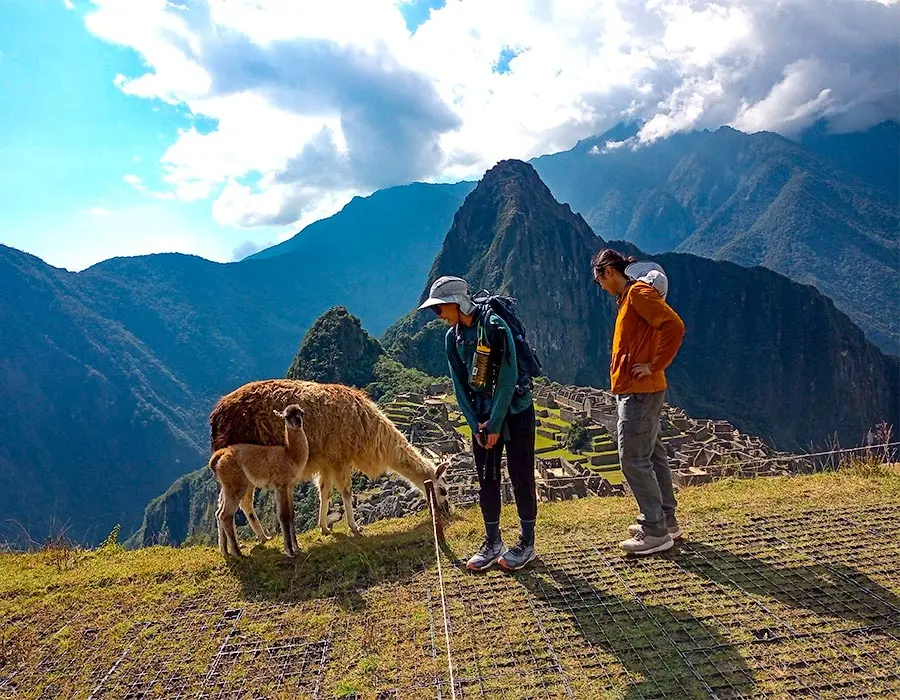
By far the most well known UNESCO world heritage site in Peru and the pinnacle of many people's visits to South America. This is where you wanted to be.
Real reviews from travelers who explored Machu Picchu and Cusco with us, straight from Tripadvisor, Google and Trustpilot.
The trip is Sacred Valley, the daily trip is wonderful, the guide Grobert and the driver are nice. We enjoyed the full trip.
I had the best experience with Sam travels, we had an amazing time doing the 4d Salkantay trek, we had the best weather. Specifically want to mention Josep what an amazing cool guy he was. A real leader, great story teller, motivator and made you feel like you were taking on something special. Secondly another special mention for Andres and his catering team. The food was amazing, real nutritious and energising for the long trekking days.
Finally the horse man Donato, he managed to get all of our fresh clothing to the next camp very efficiently. Highly recommend a trip with this company.
We did the 2-day Short Inca Trail and it was a fantastic experience! Our guide, Fredy Zapata, was excellent. He told us so much about the history of the Incas and the region, and was able to answer every question we had. He did a great job and made the whole experience really enjoyable.
The highlight was definitely arriving at the Sun Gate and seeing Machu Picchu for the first time. An unforgettable experience that we would highly recommend!

Amazing trip! What a great experience, so well organized. Our guide Josep was a guiding star who knows so much and shared a lot of information. Very kind and helpful in every way. The cooking team of Andres was amazing and we had wonderful and a great variety of meals every evening. Donato the horseman made sure we got our stuff safe and in time to every stop. I could not ask for a better experience to be honest. Especially Josep, thank you for being so flexible, organized and sharing your knowledge.
We did the Salkantay Trek with SAM Travel and couldn’t have been happier with our choice! Our guide, Josep, was incredibly friendly, knowledgeable and passionate. He answered every single one of our questions about nature, history and Peruvian culture honestly, even better than ChatGPT! ;) We especially loved being in such a small group. It made the whole experience feel much more personal, relaxed and authentic.. The accommodations throughout the trek were excellent, and the food prepared by Andrés was absolutely outstanding. We were honestly surprised by the quality and variety of the meals, especially considering we were in the middle of the mountains. We spent a long time researching different companies before booking the Salkantay Trek, and choosing SAM Travel was definitely the right decision. Everything was extremely well organized, and the entire experience exceeded our expectations. We would 100% recommend SAM Travel, and especially Josep and Andrés, to anyone planning to do the Salkantay Trek!

Great trip. Great people. Loved my time with Joseph, Andres, Donato.and Elvis. Amazing world to explore made extra special with great people. Shout to my fellow travellers

It was amazing. We had the best Guide with Josep who is Sperling really good English and explaining so many things to us as well as introducing us perfectly to the altitude and the landscape. The Pick Up, accomodation and especially the food was so well organized and delicious. I highly recommend doing this trek, it was spectacular. 😍

We had an amazing experience on the 4 day/3 night Salkantay Trek with Sam Travel Peru. Everything was seamless from beginning to end.…

I joined the 2-day, 1-night tour to Cusco and Machu Picchu with SAM TRAVEL, and it was an amazing experience from start to finish.…

We had an incredible time on the 3D/2N Sacred Valley and Machu Picchu tour and would highly recommend it. It was fantastic to visit some of the highlights of the Sacred Valley, including Pisac, the Maras Salt Mines and Moray on the first…

We did the 4-day Inca Trail with Sam's Travel, and it was an absolutely unforgettable experience. It's something we will cherish for the rest of our lives.…

We had a great time on our 3d/2n tour of the sacred valley and short inca trail. The sacred valley prepared us very well for Macchu Picchu and the information provided was great. Our guide Rolando was very knowledgeable about the inca…

We’ve just done the 4-Days Inca trail with SAM travel. Our main guide Josep was very professional, knowledgeable and considerate. He really made sure that we enjoy the journey and our needs are addressed. Jimmy, our assistant guide, helped…

We had a great experience with Sam Travel Peru. Always felt well taken care of and safe. Our guide, Israel, was friendly, knowledgeable, and helpful. The office staff were always quick to reply to emails.…

Awesome trip with Josef as our guide Mario the chef with amazing food and porters who were our hero’s.

We booked a day tour for the Rainbow Mountain and it had been just perfect. Fernando, our guide, was really kind and attentive. All the staff is professional and friendly, totally recommended!

We recently completed the Salkantay Trail trek with Sam Travel, and we couldn't be happier with our experience. Our guide, Jhordy, was exceptional. He was highly professional, providing great insights, facts, and stories that enriched our journey. Jhordy was very patient with us and demonstrated remarkable flexibility, adjusting the itinerary when we weren't feeling our best. We highly recommend Sam Travel, especially Jhordy, for making our trek an incredible time.
We couldn't make this impact without our partners. Join us in changing lives.