Planning your Inca Trail trek in 2026 feels a little different. The experience itself is the same, but what you are allowed to bring has evolved.
There’s now a stronger push toward zero plastic, lower waste, and responsible trekking. If you don’t prepare properly, you might end up repacking your bag the night before your trek or leaving items behind.
This guide walks you through exactly what’s changed, what to pack now, and how to stay compliant without overcomplicating things.
What Changed for 2027?
The Inca Trail has always had strict regulations, but enforcement is tighter now.
Here’s what matters:
- Single-use plastics are discouraged or restricted
- Porter weight limits are more strictly enforced
- More focus on eco-friendly gear and waste management
- Tour operators are expected to follow sustainability protocols
This doesn’t mean your trip is harder. It just means you need to pack smarter.
What “Zero Plastic” Actually Means on the Trail
This is where most travelers get confused.
You are not banned from bringing plastic entirely. The focus is on reducing disposable plastic waste.
Avoid bringing:
- Disposable plastic water bottles
- Plastic snack wrappers (when possible)
- Single-use toiletry sachets
Bring instead:
- Reusable water bottles or hydration systems
- Refillable containers for snacks
- Solid toiletries (shampoo bars, soap bars)
The goal is simple: carry in, carry out, and minimize waste.
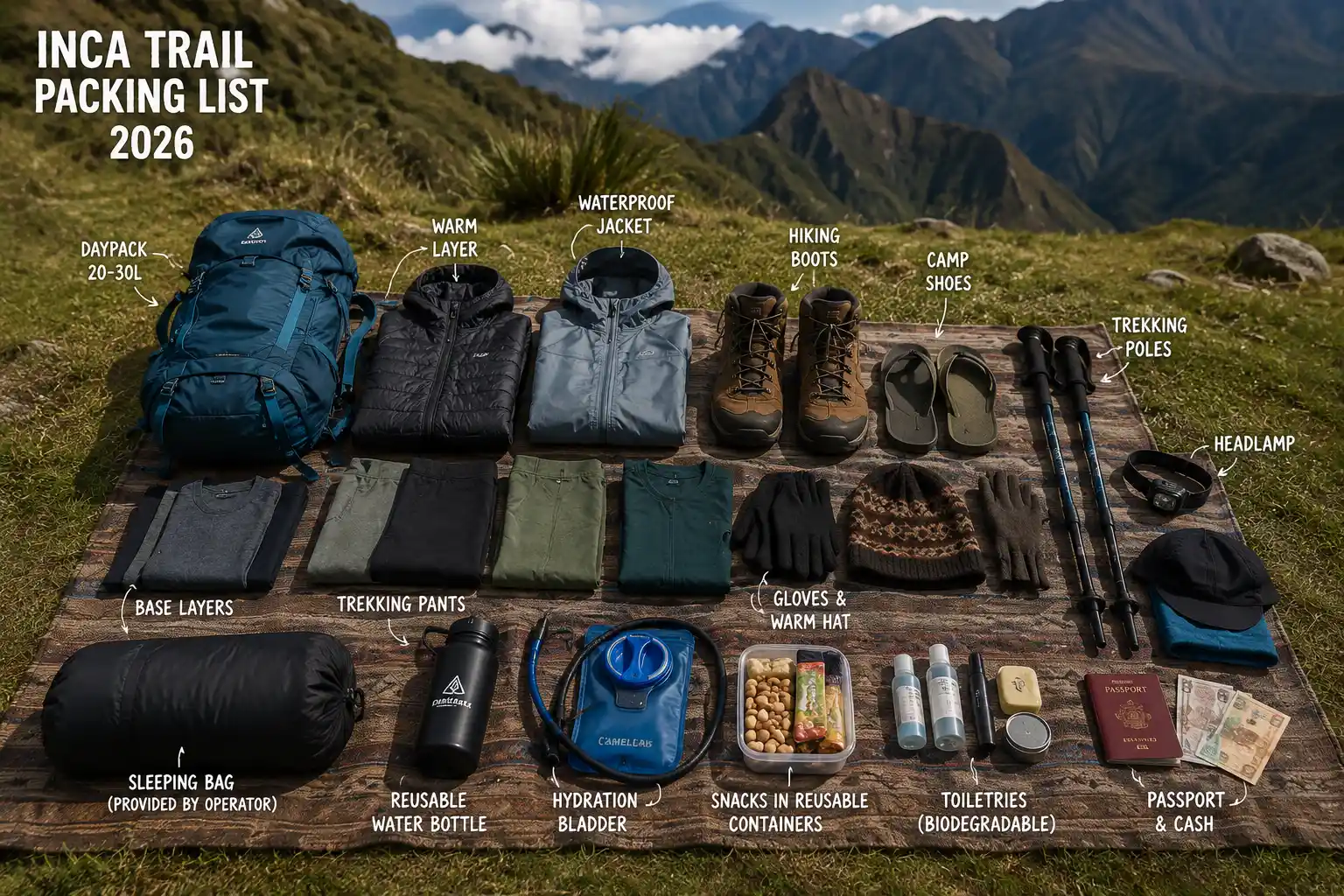
Updated Packing List (2027 Essentials)
Let’s break this down into what actually matters on the trail.
Clothing
- Moisture-wicking base layers
- Warm mid-layer (fleece or down jacket)
- Waterproof jacket
- Hiking pants (avoid jeans)
- Hat, gloves, and buff
Footwear
- Broken-in hiking boots
- Comfortable camp shoes or sandals
Gear
- Daypack (20–30L)
- Trekking poles (recommended for stairs)
- Headlamp
- Sleeping bag (usually provided by operator, confirm first)
Hydration & Food
- Reusable water bottle or hydration bladder
- Electrolyte tablets
- Snacks in reusable containers
Toiletries
- Biodegradable soap
- Toothbrush and small toothpaste (non-single-use preferred)
- Quick-dry towel
- Toilet paper (carry out used paper where required)
Personal Items
- Passport
- Cash (small bills)
- Sunscreen
- Insect repellent
Porter Weight Limits (What You Can Actually Bring)
This is one of the most important updates.
| Category | Limit |
| Duffel bag carried by porters | ~7 kg (15 lbs) |
| Daypack (you carry – 25L or 30L) | 5–7 kg recommended |
If you go over:
- You may need to pay for an extra porter
- Or leave items behind in Cusco
The smarter approach is to pack light from the start.
Key Packing Differences: Before vs Now
| Item | Before | 2026 Update |
| Water bottles | Disposable OK | Reusable strongly encouraged |
| Snacks | Any packaging | Minimize wrappers |
| Toiletries | Travel sachets common | Refillable or solid preferred |
| Gear weight | Flexible | Strictly enforced |
| Waste | Less controlled | Pack-in, pack-out emphasized |
Best Strategy: Let Your Tour Handle the Heavy Stuff
This is where choosing the right experience makes a difference.
If you go with a structured tour like the Short Inca Trail, most logistics are already optimized:
- Meals prepared with minimal waste
- Water management handled efficiently
- Porters organized under regulation limits
- Equipment aligned with park rules
Or if you’re looking at alternatives:
- A train-based Machu Picchu tour minimizes packing needs entirely
- A multi-day trek like Salkantay requires even more careful packing, but operators usually guide you in detail
The key idea is simple:
the more complete the experience, the less you have to worry about restrictions.
Smart Packing Tips (From Guides on the Trail)
- Pack everything the night before and weigh your bag
- Use packing cubes to stay organized
- Bring fewer clothes than you think you need
- Prioritize layers over bulk
- Avoid “just in case” items
Most people overpack. Almost nobody regrets packing lighter.
Final Take
The 2027 updates are not there to make your trip harder. They are there to protect the trail.
If you:
- Pack light
- Avoid single-use plastic
- Choose the right gear
You will be fully prepared.
And once you’re on the trail, none of this will matter as much as the experience itself.
FAQS
Are plastic items completely banned on the Inca Trail?
No. The focus is on reducing single-use plastics, not banning all plastic. Reusable items are strongly encouraged.
What happens if my bag exceeds the porter weight limit?
You may need to pay for an additional porter or remove items before starting the trek. Limits are enforced more strictly now.
Can I bring snacks with plastic packaging?
Yes, but it’s recommended to minimize waste. Repack snacks into reusable containers when possible.
Do tour companies help with eco-friendly packing?
Yes. Most operators now guide travelers on what to bring and often provide sustainable alternatives during the trek.
Is this different from other treks like Salkantay or Lares?
Yes and no. All treks promote sustainability, but the Inca Trail has stricter regulation and enforcement due to its protected status.