Why Lucmabamba Is the Most Comfortable Night on the Salkantay Trek
Lucmabamba is where the Salkantay Trek stops feeling like a survival experience and starts feeling like a real journey.
After crossing high-altitude passes and long hiking days, you arrive in a warm cloud forest valley. But what truly changes the experience here is not just the landscape, it’s the level of comfort.
This is where a well-designed itinerary makes all the difference.
Where Is Lucmabamba and Why Does It Matter?
Lucmabamba sits at around 2,000–2,100 meters on Day 3 of the Salkantay Trek. By this point, you’ve already completed the hardest section of the route. The altitude drops, the temperature rises, and the environment shifts into a dense, green jungle.
This makes it the ideal place to:
- Recover physically
- Slow down the pace
- Add experiences beyond hiking
What Makes the Lodging in Lucmabamba Different?
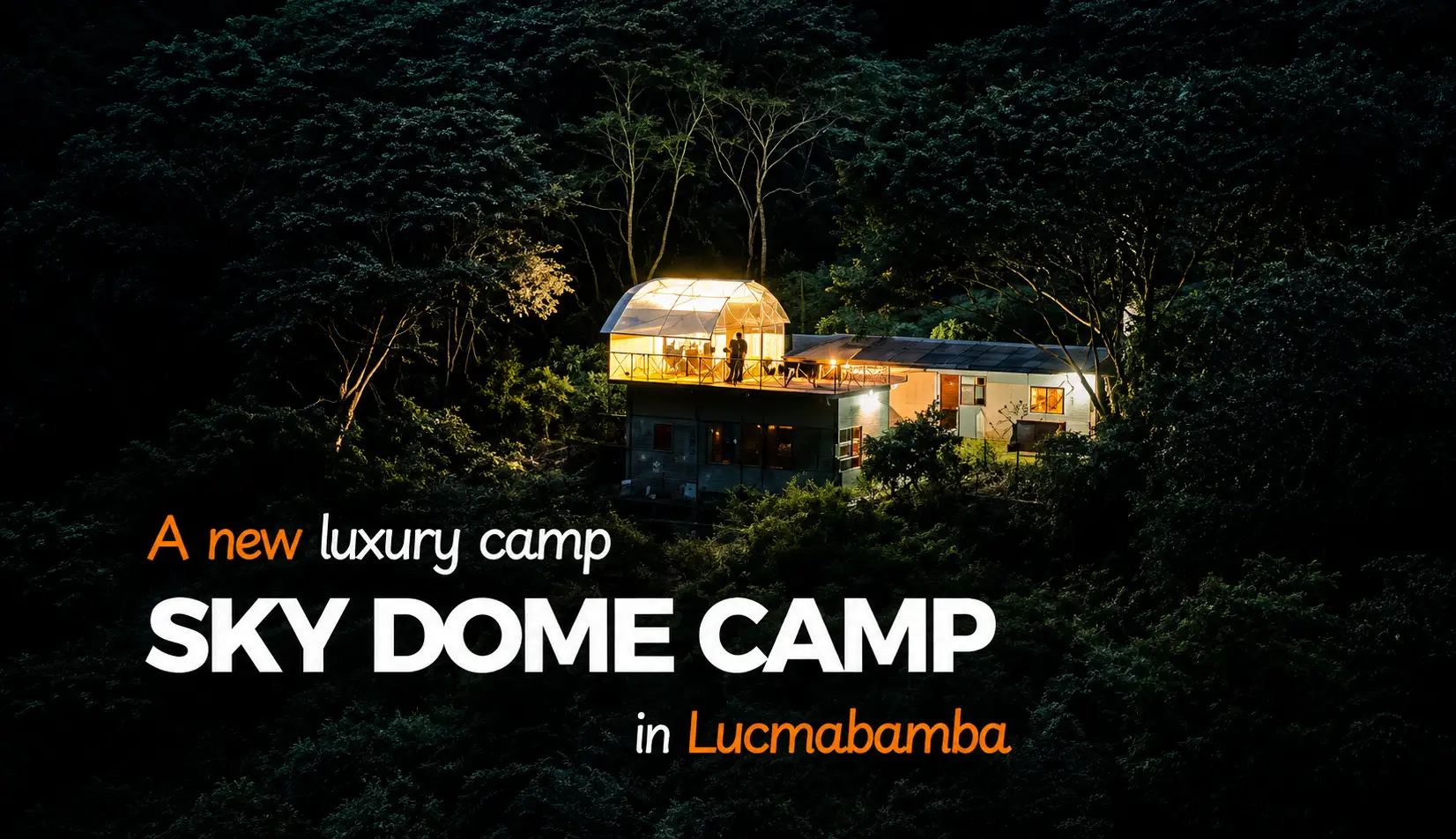
This is where Lucmabamba stands out the most. Instead of basic camping, the experience is built around a mountain lodge designed for comfort in the middle of the jungle.
What you get here:
- Private rooms instead of tents
- Private bathrooms with proper facilities
- Real beds and a protected indoor space
- Electricity and a more stable setup than standard camps
This is a major upgrade compared to earlier nights on the trek, where conditions are more basic. Well-designed lodges in Lucmabamba are built to balance comfort and nature, often using local materials and open designs that keep you connected to the environment while still allowing you to rest properly.
The Dining Experience: One of the Highlights
One of the most unique elements of the Lucmabamba stay is the dining space. Instead of a dining tent, the setup enhances the environment:
- A fully transparent dining room
- Open views of the valley and surrounding mountains
- Natural light during the day
- Clear skies at night for stargazing while you eat
This transforms dinner from a routine meal into part of the experience. After several days of trekking, sitting down in a comfortable space with a view and proper service changes how you feel about the entire journey.
Included in All Salkantay Treks by Sam Travel Peru
This level of infrastructure is not standard across all Salkantay tours. The mountain lodge experience in Lucmabamba is included in all Salkantay Trek itineraries operated by Sam Travel Peru, which means:
- You don’t need to upgrade separately
- The experience is already built into the route
- The itinerary is designed around making the most of this stop
This is an important detail, because many itineraries still use basic camps in this section.
The Coffee Experience in Lucmabamba
Lucmabamba is located in a coffee-growing region, and this is where the trek connects directly with local life.
Most experiences include:
- Visiting a small coffee farm
- Learning how beans are harvested and processed
- Roasting and grinding coffee manually
- Tasting fresh coffee on-site
The climate and soil in this area create ideal conditions for coffee production, which is why this activity fits naturally into the itinerary.
What to Do in Lucmabamba
Coffee Tour
This is the core experience. It adds cultural depth and gives you a break from hiking without losing momentum in the journey.
Ziplining
Ziplining is one of the most popular optional activities in the area.
- Takes place over the valley and river
- Short and efficient experience
- Easy to fit into the afternoon schedule
It’s a good option if you want to add something active without overloading the day.
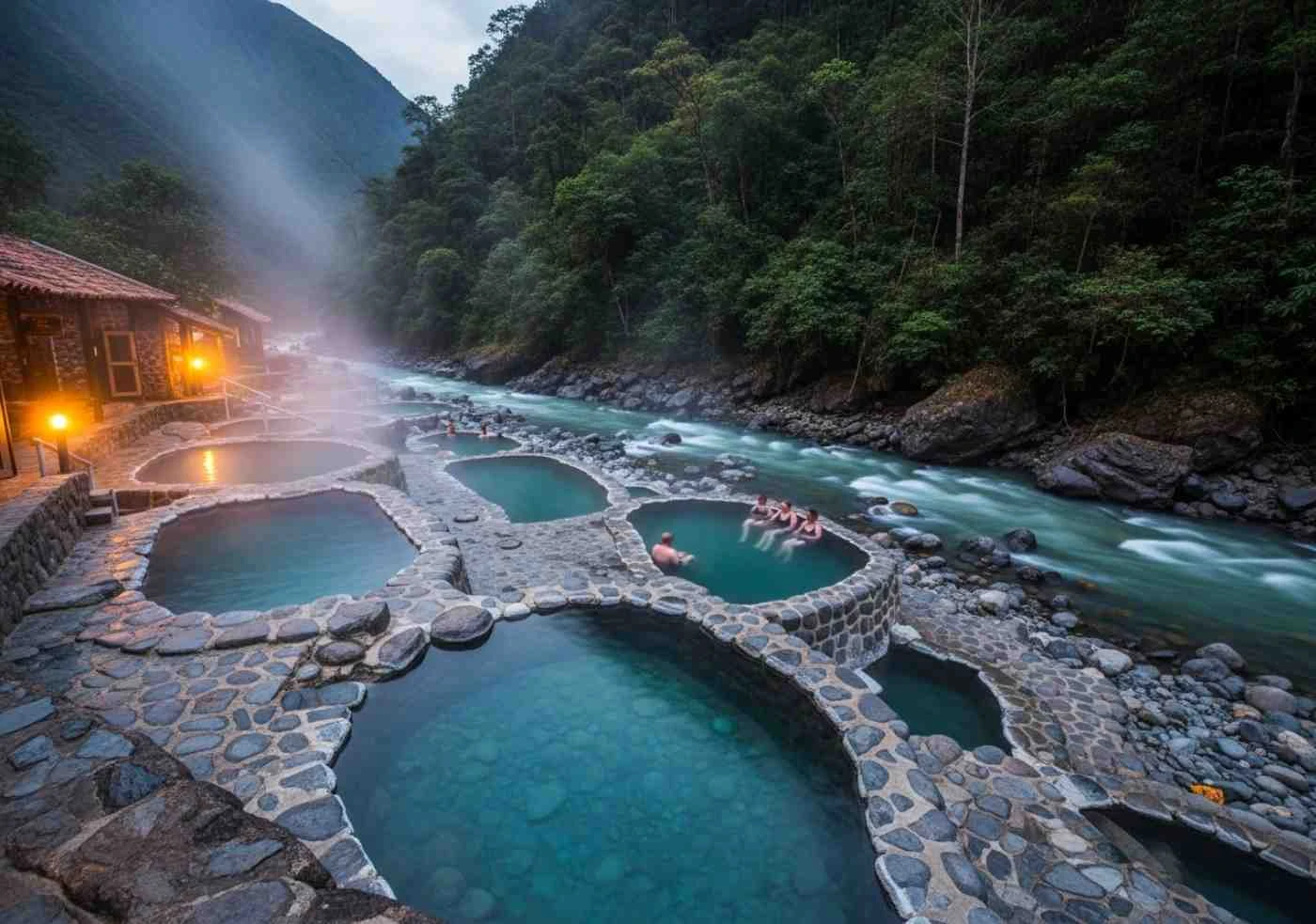
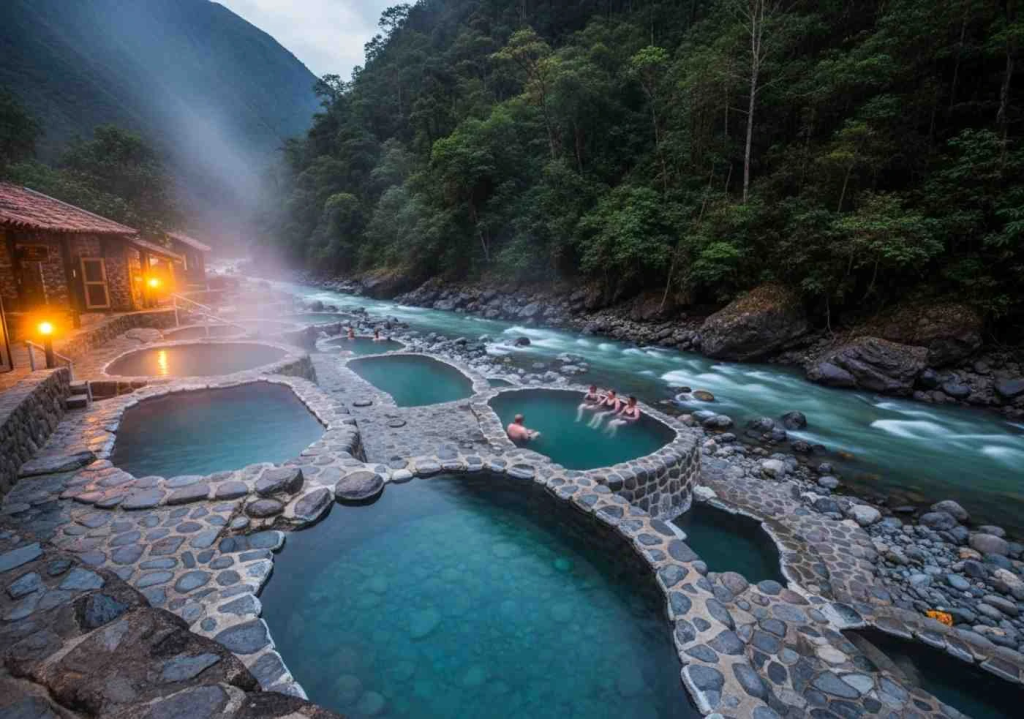
Cocalmayo Hot Springs
Located near Santa Teresa, a short drive from Lucmabamba.
- Multiple hot pools (around 38–44°C)
- Set next to a river in a jungle environment
- Best visited in the afternoon or evening
After several days of trekking, this becomes one of the most effective recovery moments of the entire trip.
Lucmabamba vs Santa Teresa: Where Should You Stay?
| Factor | Lucmabamba | Santa Teresa |
| Accommodation | Mountain lodge experience | Basic hotels and hostels |
| Experience | Integrated into the trek | Separate stop |
| Atmosphere | Quiet, nature-focused | Small town environment |
| Best for | Recovery + experience | Hot springs visit |
If your goal is to improve the overall quality of your trek, staying in Lucmabamba is the better choice.
What Happens After Lucmabamba?
From here, the trek continues toward:
- Llactapata (first distant view of Machu Picchu)
- Hidroelectrica and then Aguas Calientes
Lucmabamba is the last moment to recover properly before the final stretch.
Practical Tips for Lucmabamba
- Weather: Warm and humid
- Clothing: Light, breathable layers
- Bring: Insect repellent and a swimsuit
- Use the time well: Rest, don’t overexert
This is where smart pacing makes a difference for the last day.
Is Lucmabamba Worth It?
Yes, especially if your itinerary includes the right infrastructure.
Lucmabamba is where comfort, nature, and local culture come together. A proper lodge setup with private rooms, bathrooms, and a well-designed dining space changes the entire experience of the Salkantay Trek.
FAQS
Is Lucmabamba accommodation always this comfortable?
No. Many tours still use basic campsites. The lodge experience depends on the operator you choose.
Do I get a private room in Lucmabamba?
On premium itineraries, yes. This is one of the main upgrades compared to earlier nights.
Is the lodge included in the tour price?
With Sam Travel Peru, yes. It’s already part of the itinerary.
Can I still do activities like hot springs or ziplining?
Yes. Both can be added without affecting your overnight stay in Lucmabamba.
Is Lucmabamba better than staying in Santa Teresa?
For the trekking experience, yes. Santa Teresa works better as a short visit, not as your main overnight stop.