A Remote Journey Into the Lost Sister City of Machu Picchu
There is a moment on the Choquequirao Trek, somewhere above the Apurímac Canyon, when everything goes quiet. No crowds, no noise, just the sound of wind moving through the valley and condors circling far above.
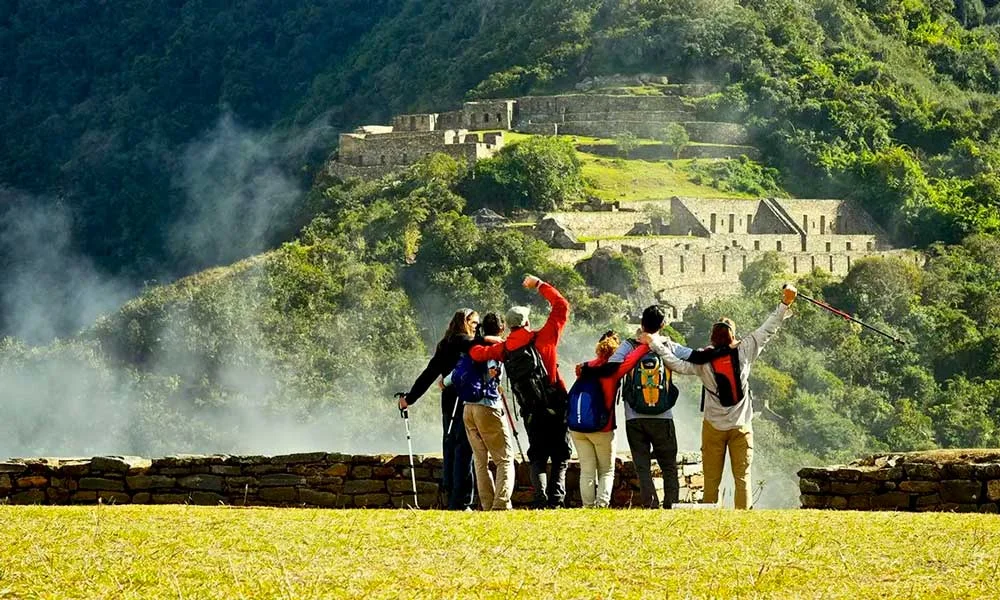
This is Choquequirao, often called the sister city of Machu Picchu, but far more remote, far less visited, and arguably more rewarding to reach.
Unlike the classic routes in Peru, this is not just a hike. It is a true expedition across ecosystems, from deep canyon heat to high Andean passes and cloud forests, ending on the way to Machu Picchu.
Exploring Choquequirao: A Hidden Inca Masterpiece
As the morning mist lifts, the trail gently contours along the canyon walls, revealing sweeping views over the vast Apurímac Valley. Orchids, bromeliads, and lichens line the path as you approach the ruins.
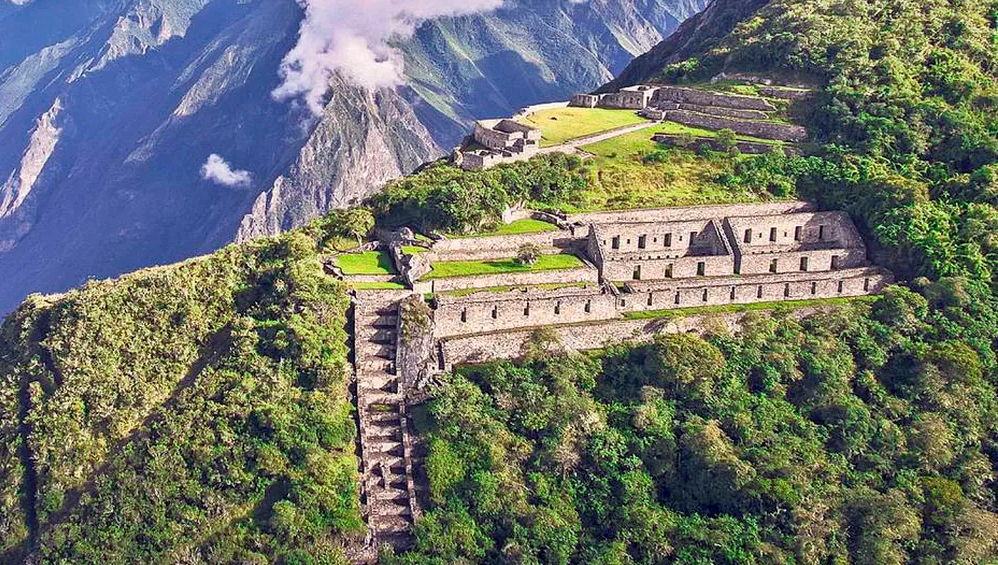
Built during the reign of the Inca emperor Pachacutec, the site was dedicated to the sun, water, and the sacred apus, or mountain spirits. Its layout mirrors the grandeur of Machu Picchu:
- Agricultural terraces cascading down steep slopes
- Ceremonial plazas and temples
- Water canals and residential sectors
- The famous llama terraces carved into the mountainside
All of it sits high above the canyon, surrounded by snow-capped peaks.
It is common to see condors gliding overhead, and with some luck, even a spectacled bear in the distance.
Beyond Choquequirao: The Route to Yanama
Most trekkers turn back after reaching Choquequirao, completing a four to five day journey. Continuing forward is where the experience becomes more unique.
The Descent and Climb
The trail drops sharply:
- A short climb to a 3,200 meter pass
- Followed by a long descent to the Río Blanco at 1,900 meters
Here, the climate shifts dramatically. It becomes warm, humid, and almost tropical. The river offers a perfect place to cool off and recover before the next challenge.
Along the way, you can explore the lesser-known Pinchaunuyoc terraces, recently cleared and rarely visited.
Then the climb begins again.
A long, steady ascent leads to Maizal at 3,000 meters, a remote hillside stop where a local family farms cattle and grows small crops. It is a simple place that highlights how isolated this route truly is.
Crossing the High Andes: The San Juan Pass
The following morning brings one of the most rewarding sections of the trek.
You move through changing landscapes:
- Cloud forest filled with vegetation
- Flower-rich valleys
- High-altitude grasslands
Eventually, you join a well-preserved Inca stone trail. At 4,150 meters, the San Juan Pass is the highest point of the journey.
From here, the views open dramatically:
- Glacial peaks like Pumasillo dominate the skyline
- Deep valleys stretch behind you
- The contrast between ecosystems becomes very clear
It is a place where you truly feel the scale of the Andes.
Arrival in Yanama: The End of the Trek
The final stretch leads into Yanama at 3,500 meters, a small Andean village. This marks the end of the trekking portion.
- Cold drinks are available
- Your legs finally get a break
- There is time to reflect on the journey
From here, a road connects Yanama to Santa Teresa, where the trip continues by vehicle toward Machu Picchu.
What to Pack for the Choquequirao Trek
This is a remote and demanding trek, so packing correctly is essential.
Clothing and Protection
- Lightweight long-sleeve shirts for sun and insects
- Trekking pants
- Warm layers for high altitude
- Waterproof jacket
- Sun hat and sunglasses
Essentials
- At least 2 liters of water capacity plus purification tablets
- High SPF sunscreen
- Strong insect repellent
- Personal medications
Gear
- Trekking poles for steep sections
- Comfortable, well-used hiking boots
- Breathable socks
Is the Choquequirao Trek Worth It?
If you are looking for:
- Fewer crowds than the Inca Trail
- A more authentic trekking experience
- A mix of nature, culture, and archaeology
- A strong sense of achievement
Then this is one of the most rewarding treks in Peru.
FAQS
How difficult is the Choquequirao trek?
It is considered challenging due to steep descents and long climbs in and out of the canyon.
How many days does the Choquequirao to Machu Picchu trek take?
Most itineraries range from 7 to 9 days, depending on the route and pace.
Do you need a permit for Choquequirao?
No special permit is required. You only need an entrance ticket to the site.
Is Choquequirao better than Machu Picchu?
It offers a different experience. It is more remote, less crowded, and more physically demanding.
Can beginners do the Choquequirao trek?
It is possible, but only with good fitness and proper acclimatization.