
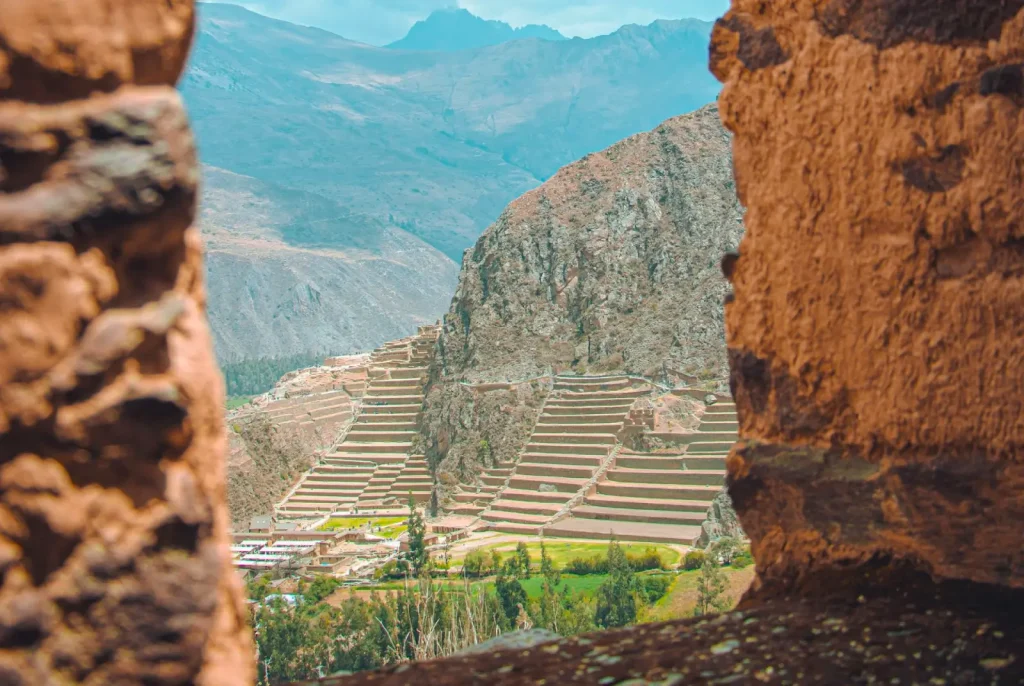
Sitting at 2,792 meters above sea level in the heart of the Sacred Valley, Ollantaytambo is about 90 minutes by road from Cusco and roughly 1 hour and 45 minutes by train from Machu Picchu. What sets it apart is that it is the only Inca town where the 15th-century street plan, water channels and adobe walls are still part of everyday life. Families live in homes raised by the Incas, water keeps running through Inca-built channels, and the fortress above town ranks as the second most impressive Inca site after Machu Picchu.
2,792 m
Altitude above sea level
90 min
By road from Cusco
1 h 45 min
By train to Machu Picchu
In this guide you will find what to see, where to sleep, where to eat and how to plan a half-day, full-day or overnight visit in 2027.
What Makes Ollantaytambo Different?
Most Sacred Valley sites are archaeological parks: well preserved, but with no one living in them. Ollantaytambo breaks that pattern. Here, Inca infrastructure is not kept behind ropes like a museum piece; it is used every single day. The cobbled lanes of the lower town, known as the Qosqo Ayllu neighborhood, still follow the grid that Inca planners laid out around 1450. The water channels running along those lanes are the same ones that served Inca households some 575 years ago, and they still carry water today. Many homes stand on Inca foundations, with adobe walls that have endured five centuries of weather and earthquakes.
This is not a romantic exaggeration: it is backed by UNESCO documentation. The town is part of the protected cultural heritage of the Sacred Valley, and Peru’s Ministry of Culture actively preserves its urban layout as well as the famous fortress on the hillside above.
For travelers, this makes Ollantaytambo special in two ways:
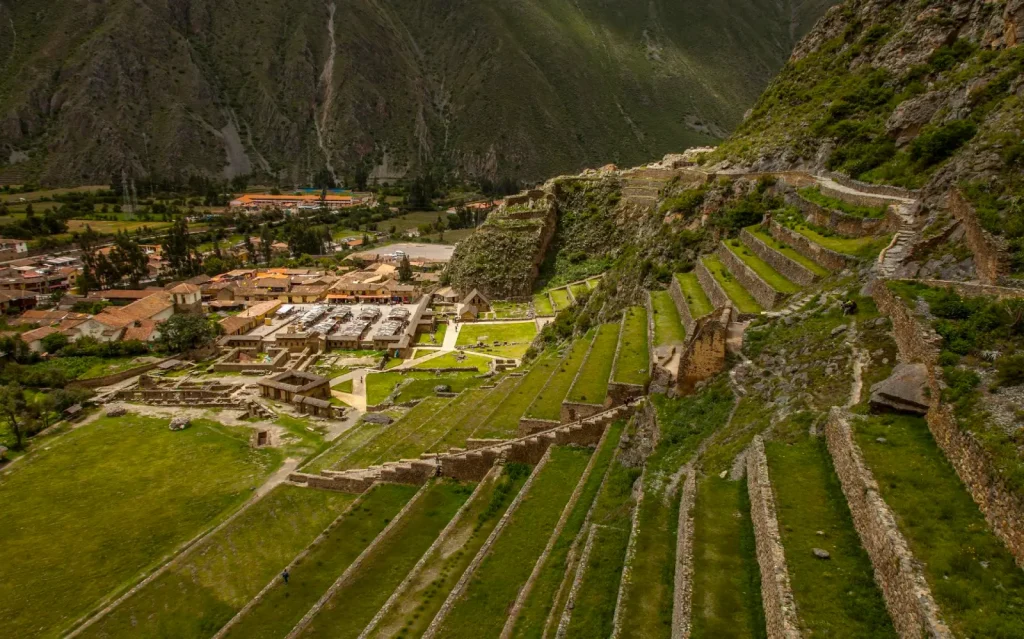
The archaeological experience goes far beyond the ticketed ruins. Simply walking through the lower town is a rewarding Inca experience on its own, free and open to anyone without a ticket.
The town has a living economy that does not rely only on tourism. Locals farm, weave, run small shops and go about their daily lives. Tourism matters, but it does not define the place the way it does in Aguas Calientes, for example.
The Ollantaytambo Ruins: The Main Attraction
The archaeological complex climbs the mountainside right above town and, architecturally, it is the second most remarkable Inca site outside Machu Picchu. Its highlights include:
Agricultural terraces: Massive stone-walled terraces rise roughly 200 meters up the slope. You can spot them from almost anywhere in town, and they dominate the skyline.
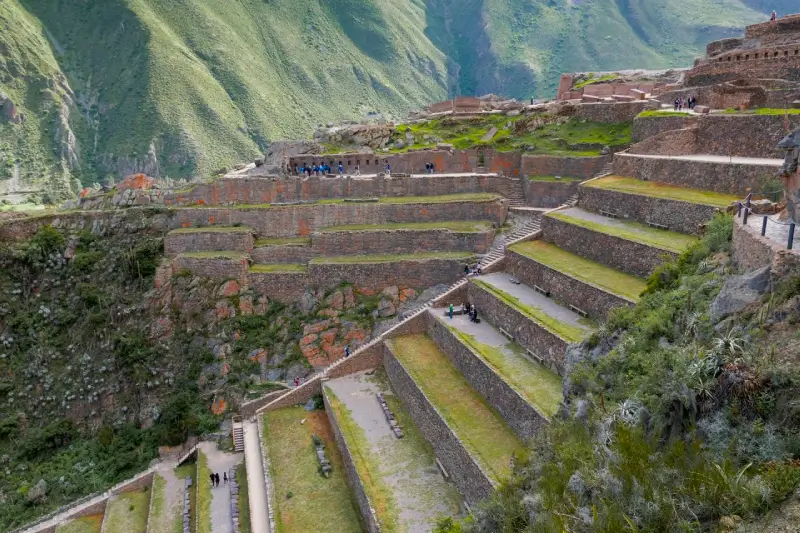
Temple of the Sun: At the top of the terraces sits an unfinished ceremonial complex made of six pink rhyolite blocks. Each weighs around 50 tons and was brought from a quarry 6 kilometers away, on the other side of the Urubamba Valley.
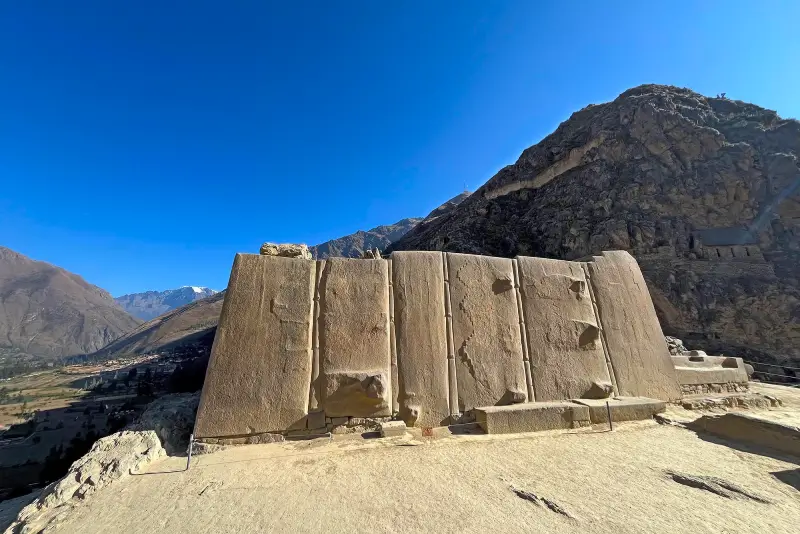
Wall of the Six Monoliths: The centerpiece of the Temple of the Sun, regarded as one of the most precise examples of Inca stonework ever created.
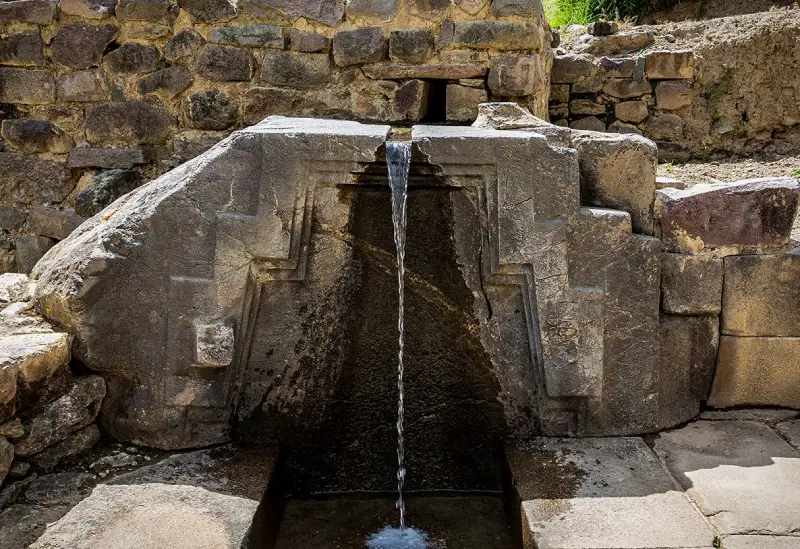
Princess Baths (Baños de la Ñusta): At the foot of the complex, a finely carved granite fountain that worked both as part of the irrigation system and as a religious site.
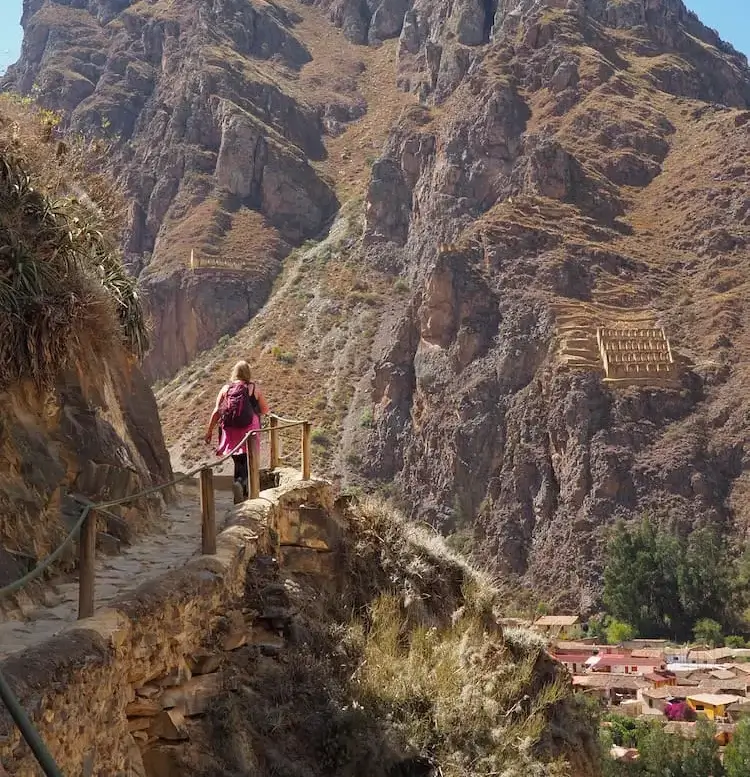
Balcón Pata: A narrow ledge leading to additional structures and terraces, with sweeping views over the Sacred Valley below.
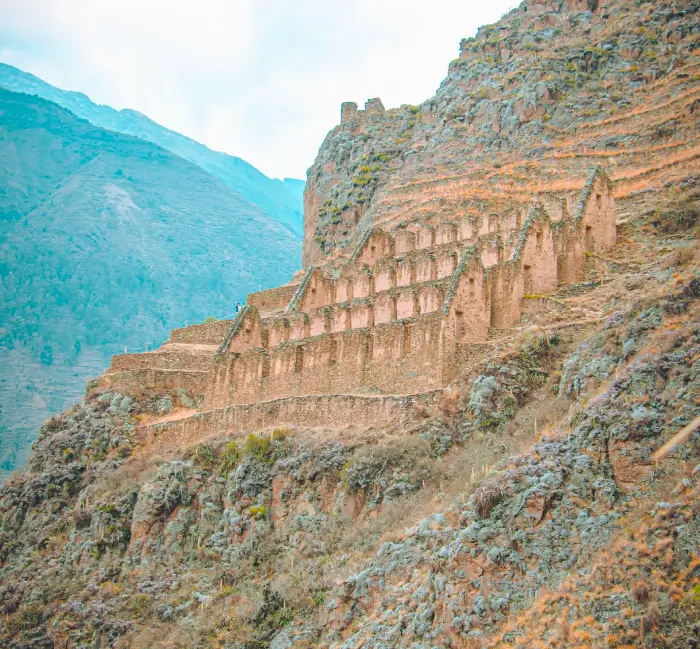
Enclosure of the Ten Niches: Outstanding ceremonial stonework inside the upper temple complex.
A piece of history: in 1536, the forces of Manco Inca defeated a Spanish expedition led by Hernando Pizarro at this very fortress, one of the few Inca military victories against the conquistadors. The defenders hurled stones, spears and arrows from the high terraces and then flooded the plain below to force the Spanish to retreat. Shortly afterwards, Manco Inca withdrew to Vilcabamba and Ollantaytambo eventually fell, but this moment of resistance gives the site a historical weight that goes beyond its architecture.
Practical Details for Your Visit
| Detail | What to know |
|---|---|
| Entry | Cusco Tourist Ticket (Boleto Turístico): the full circuit (130 soles, valid for 10 days) or the partial Circuit III (70 soles, valid for 2 days, which also covers Pisac, Chinchero and Moray). Tickets are only sold in person at the COSITUC offices in Cusco or at the entrance of any of the included sites. |
| Visit length | Between 90 minutes and 2.5 hours, depending on whether you climb all the way to the top. |
| Climb to the Temple of the Sun | 30 to 40 minutes round trip at a moderate pace, with about 80 meters of elevation gain. At 2,792 meters you will feel it, so take it slowly. |
| Opening hours | Roughly from 7:00 a.m. to 5:30 p.m., every day. |
| Crowds | Peak hours are between 10:00 a.m. and 2:00 p.m., when the Sacred Valley tour buses arrive. Early morning (7:00 to 9:00 a.m.) or late afternoon (after 3:30 p.m.) is much quieter. |
| Footwear | Closed shoes with non-slip soles. The terrace steps are uneven and often get wet and slippery when it rains. |
If you join the Sacred Valley tour or the 2-day Machu Picchu and Sacred Valley package with Short Inca Trail Machupicchu, Ollantaytambo is already included, together with a guide who knows the site’s ceremonial features and the story of Manco Inca that most independent visitors miss.
The Old Town: The Free and Underrated Half
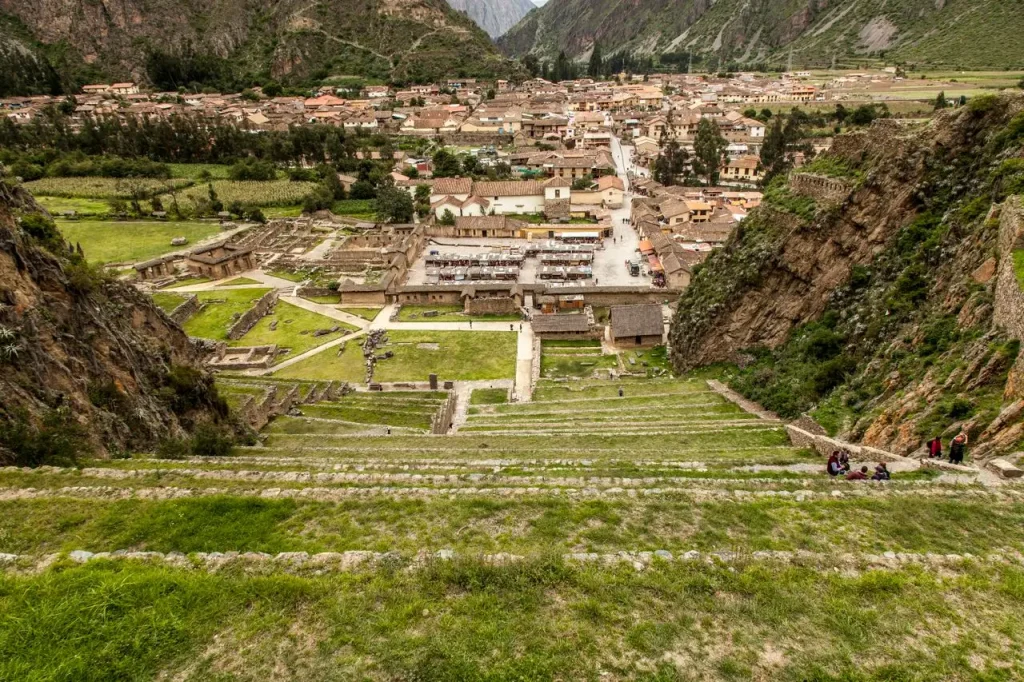
Most train passengers walk through the lower town without realizing what they are crossing. The Qosqo Ayllu neighborhood, just behind the main square, is the original Inca residential layout, and people still live in it every day.
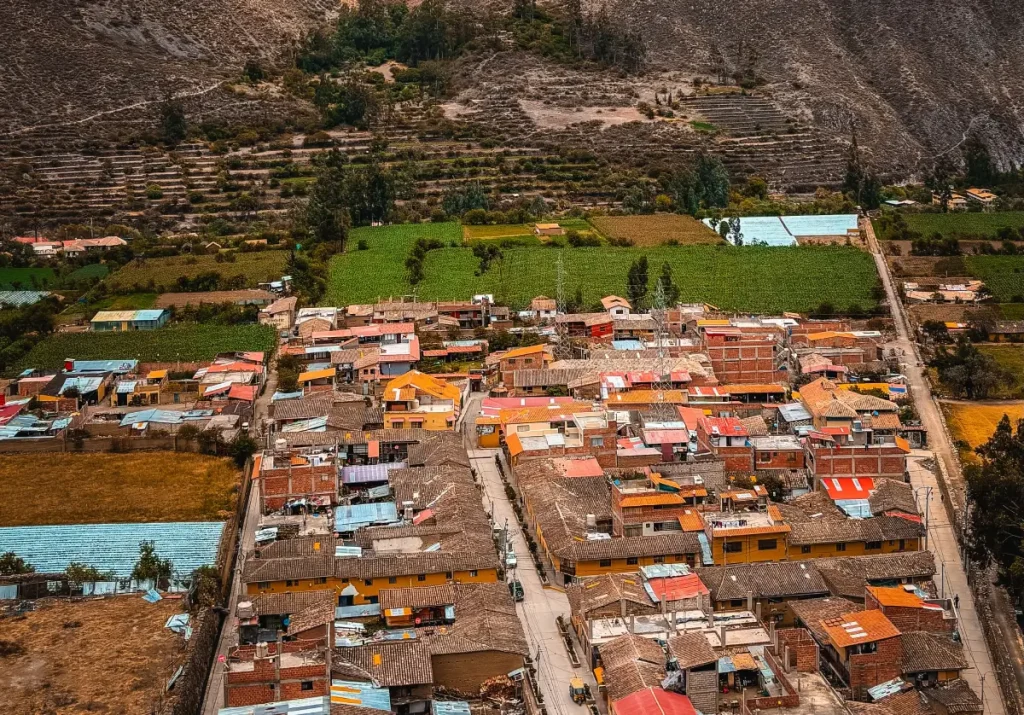
The streets keep their Inca layout: narrow, perfectly drained and designed for people on foot and small carts rather than cars.
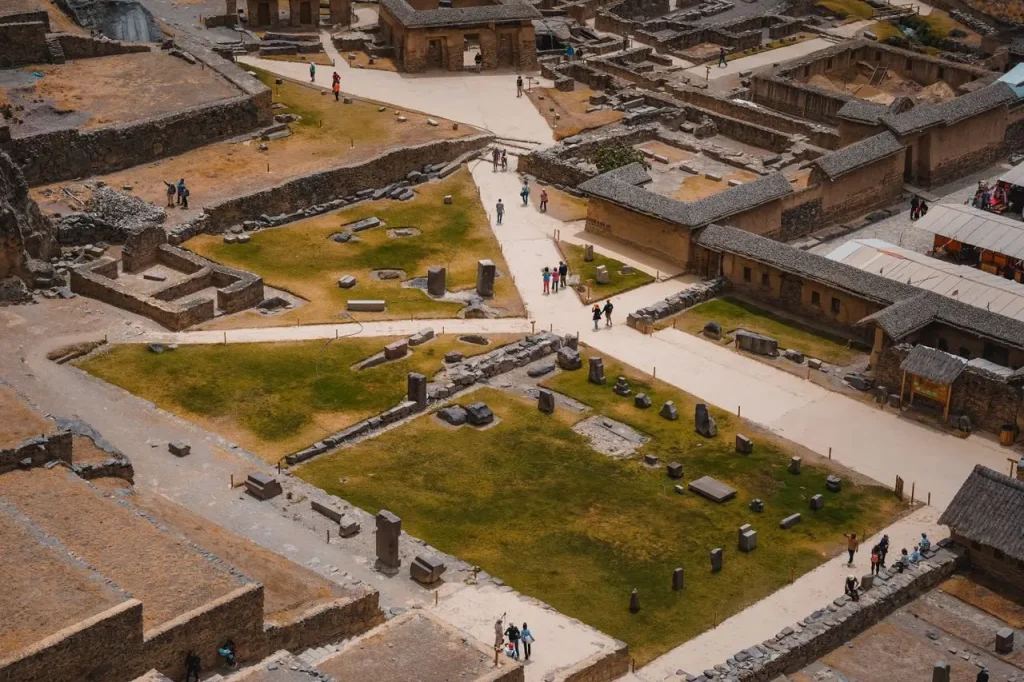
The water channels are the Inca originals: they run along the middle or the edges of the streets and are fed by spring water from the mountain above.
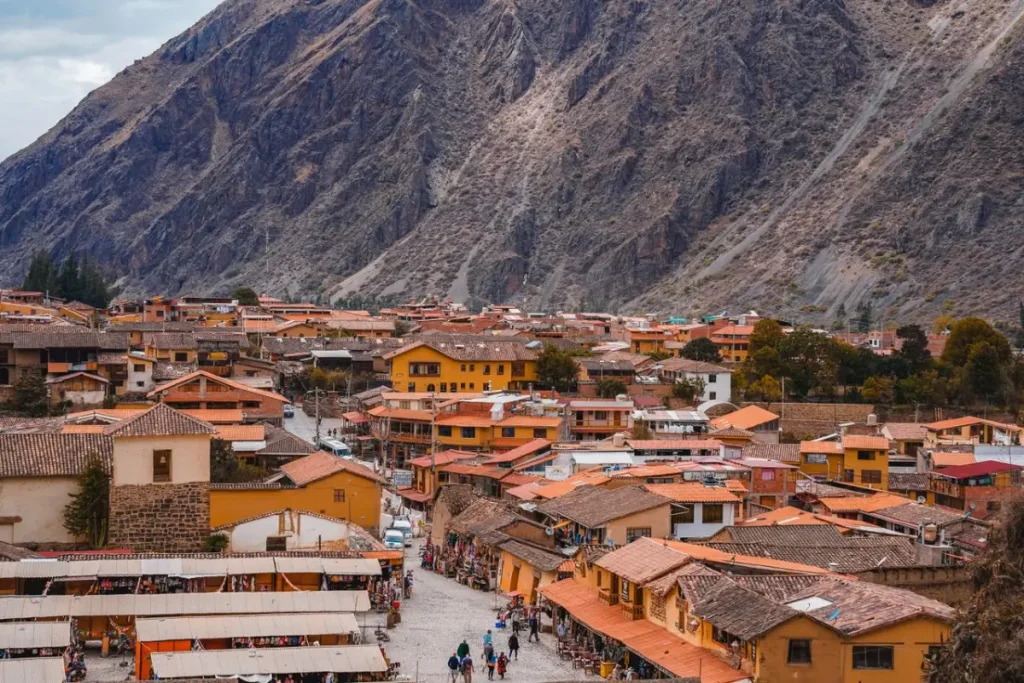
Many houses sit on Inca foundations: the ground-floor stonework dates back to the 15th century, while the upper floors are usually colonial-era adobe.
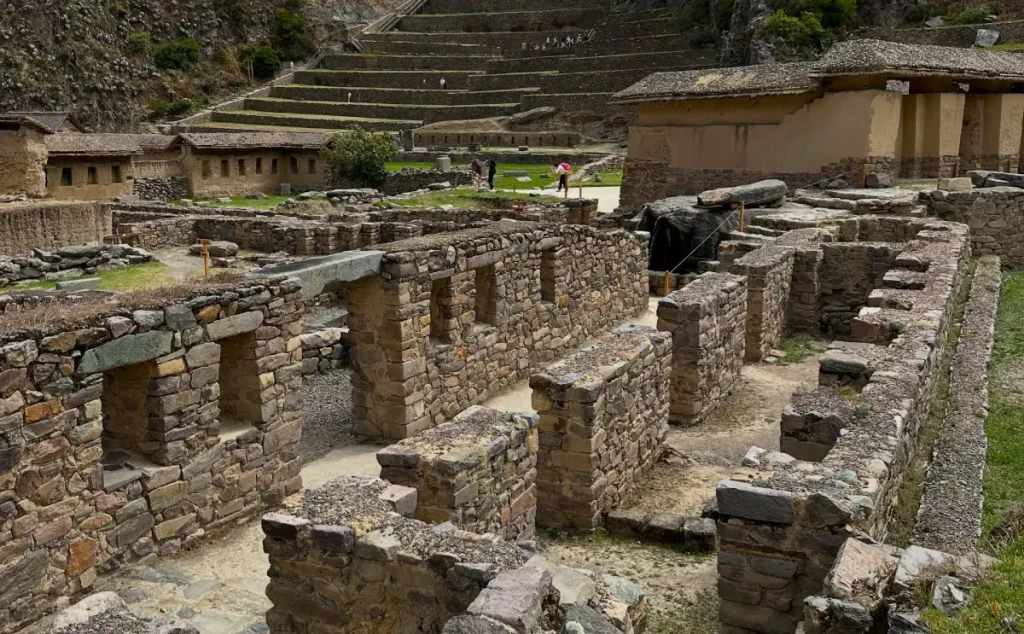
The blocks (kanchas) follow the original Inca pattern: rectangular compounds of 4 to 6 homes around a shared courtyard, entered through a single doorway from the street.
A 30-Minute Self-Guided Walk
- From the train station, walk uphill along Avenida Estación toward the Plaza de Armas.
- Cross the square and head into Calle del Medio, the central street of the old layout.
- Follow the water channels and listen to the mountain water rushing through them.
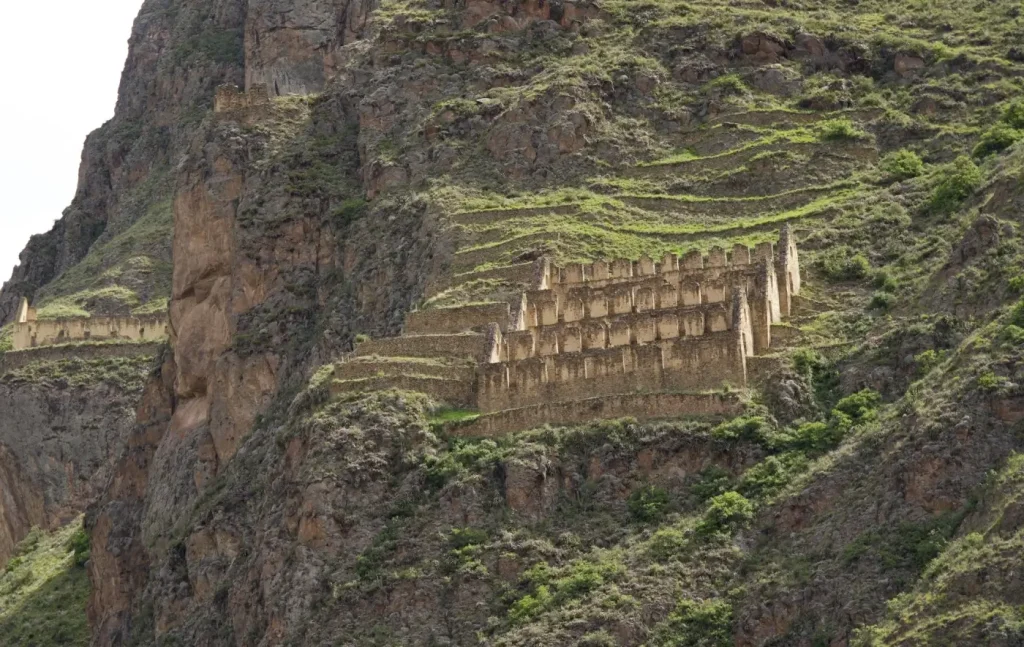
- Look east toward Pinkuylluna mountain: the small stone buildings clinging to the cliff are Inca grain storehouses (qollqas).
- Make your way back along Calle Principal, stopping at small craft stalls or at an open doorway where a local family might be cooking lunch.
This walk costs nothing, needs no ticket and, for most travelers, feels even more immersive than the paid ruins above town. Put together, both experiences make Ollantaytambo the most complete Inca experience a casual visitor can find.
Pinkuylluna: The Free Climb
If you still have energy to spare, the Pinkuylluna storehouses can be reached on a steep but free trail right across from the main ruins.
The Incas built these storehouses high on the mountainside, where the altitude kept the harvested grain cool and dry. Seen from town, they look like tiny stone fortresses hanging from the cliff.
| Detail | What to know |
|---|---|
| Trailhead | On Calle Lares, across from Hotel Picaflor Tambo, on the east side of town. |
| Time needed | About 90 minutes round trip, longer if you stop often. |
| Difficulty | Very steep, with loose rocks, narrow sections and no railings. Not recommended in the rain or without proper footwear. |
| Rewards | Spectacular views of the main Ollantaytambo ruins, the Sacred Valley and, on clear days, the snowcapped peaks to the north. Some of the best photo spots in the region. |
| Cost | Free. |
Keep in mind that this is a real high-altitude challenge. Travelers who are not yet acclimatized to 2,800 meters will find it hard. For those who are comfortable with the effort, it is one of the most rewarding free experiences in the Sacred Valley.
Where to Eat in Ollantaytambo
Ollantaytambo stands out for its excellent food scene. These are some places worth knowing:
Hearts Café (Calle Ventiderio): A long-running non-profit café whose earnings support local projects for women and children in the Sacred Valley. Quality breakfasts, strong coffee and a relaxed vibe. No reservation needed.
Chuncho (Plaza de Armas): Upscale Andean cooking focused on native ingredients and traditional techniques. Booking ahead is recommended in high season; allow 75 to 90 minutes for your meal.
El Albergue (at the train station): The restaurant of the historic El Albergue hotel, serving refined local dishes made with produce from the hotel’s own farm. Perfect if you are catching a train.
Apu Verónica (Calle Ferrocarril): Practical, fast and reliable for travelers short on time. Your food arrives within 30 minutes.
Mayupata (by the river): Mid-range Peruvian cuisine with riverside tables. Great for an unhurried lunch with a view.
Blue Puppy Lounge & Cafe: A nice spot for coffee and a light bite, with a good Wi-Fi connection.
Only have a short stop before your train? The bakeries near the Plaza de Armas sell delicious empanadas and coca tea that you can take with you on board.
Where to Stay: Day Trip vs. Overnight
Most travelers see Ollantaytambo as a stop during a day trip, and that works perfectly well. However, spending a night here is one of the most underrated choices you can make on a Machu Picchu trip.
Reasons to stay overnight:
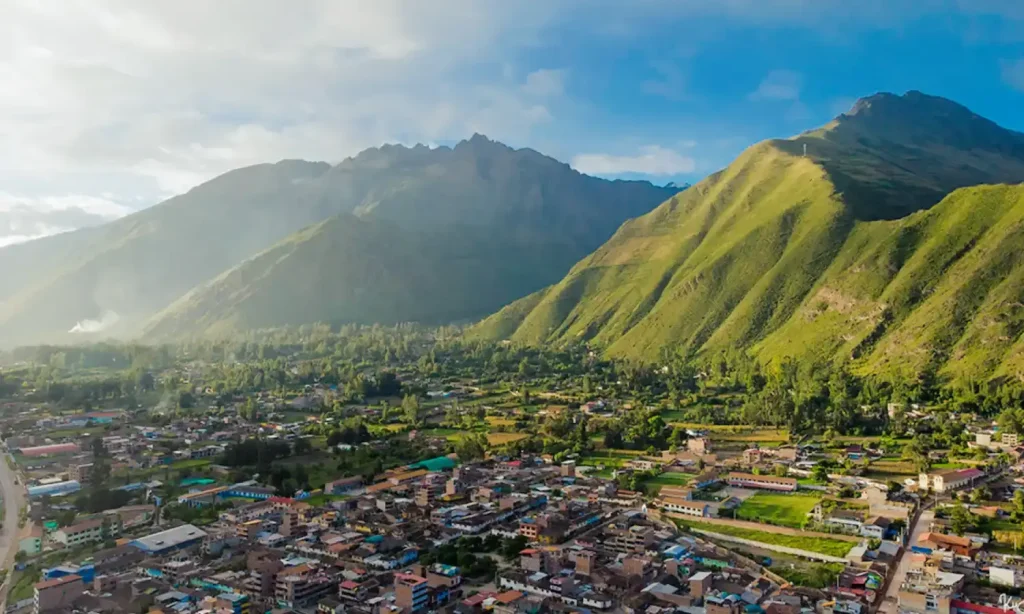
Acclimatization. At 2,792 meters, Ollantaytambo sits around 600 meters lower than Cusco, which means better sleep and easier breathing.

Easier Machu Picchu mornings. The drive from Cusco to Ollantaytambo (1.5 to 3 hours) is the most stressful part of a Machu Picchu day. Sleeping in Ollantaytambo removes it completely.
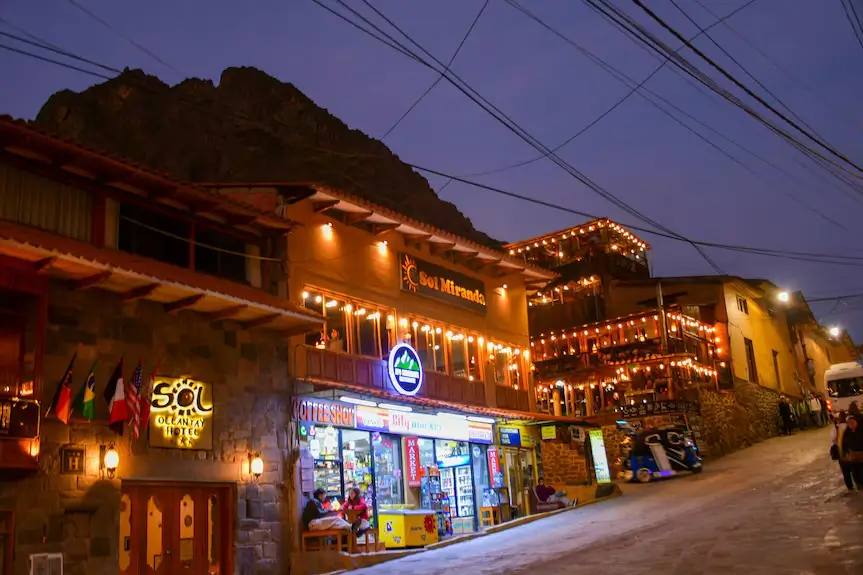
A special evening atmosphere. Once the day-trippers leave (around 6:00 p.m.), the town becomes truly peaceful: lights in old adobe windows, distant music and water still flowing through the channels.
Access to nearby experiences. Ollantaytambo is the gateway to quieter outings, such as the hike to the Inca quarry across the valley, the weaving communities of the Patacancha Valley and the walk to the Inca bridge.
Hotels Worth Considering
Approximate price ranges per night:
| Hotel | Price range | Why choose it |
|---|---|---|
| El Albergue | USD 120–180 | A historic property next to the train station, run by the same family since 1925, with its own farm and an excellent restaurant. A place with real character. |
| Apu Lodge | USD 80–120 | Mid-range and comfortable, within walking distance of everything. |
| Tunupa Lodge | USD 60–90 | Small, simple and good value for money. |
| Hostal Iskay | USD 30–50 | Budget option with private rooms. |
| Hotel Sol Ollantay Exclusive | USD 80–130 | Mid-range, surrounded by gardens. |
| Belmond Hotel Río Sagrado | USD 500+ | Riverside luxury in nearby Urubamba, a short drive from Ollantaytambo. |
If you book the 2-day Machu Picchu and Sacred Valley package with Short Inca Trail Machupicchu, the night is spent in Aguas Calientes instead of Ollantaytambo, so you can enter Machu Picchu early the next morning. Would you like to add a night in Ollantaytambo before or after the tour? It is easy to arrange.
Ollantaytambo Train Station
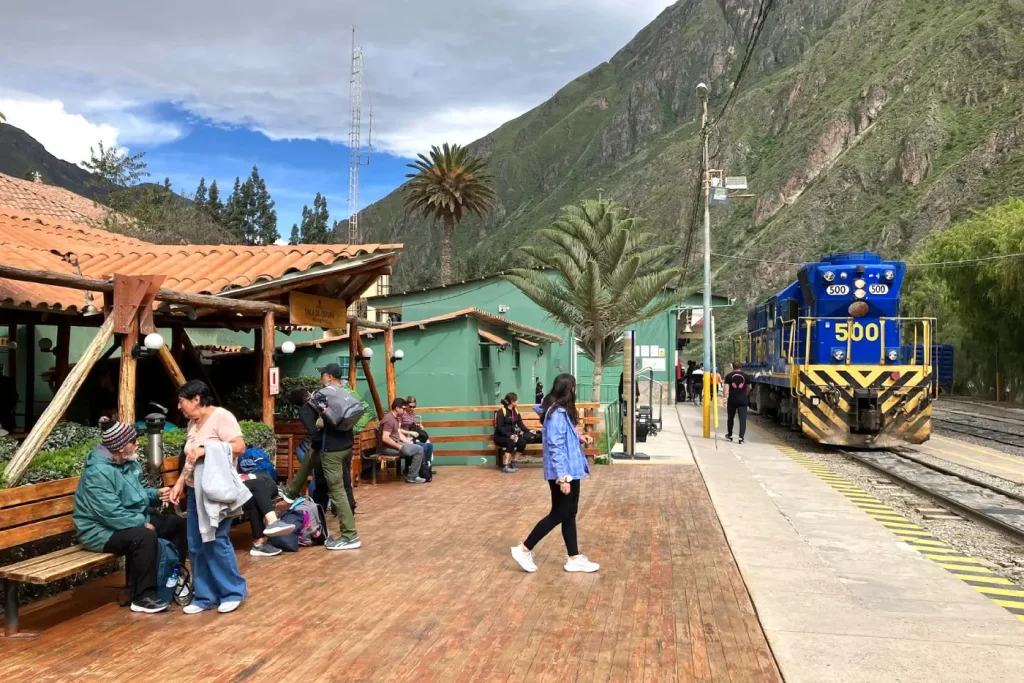
Ollantaytambo station is the main departure point for trains to Machu Picchu and the busiest transport hub in the Sacred Valley. Both PeruRail and Inca Rail operate from here, with trains leaving roughly every 1 to 2 hours from morning until afternoon.
| Detail | What to know |
|---|---|
| Boarding | Closes 30 minutes before departure. In high season, arrive 45 minutes early. |
| Luggage limits | Carry-on bags must weigh less than 5 kg and measure less than 157 cm in combined dimensions. Bigger bags can be stored at the station for 5 to 10 soles. |
| ATMs and cards | Few and unreliable. Bring cash in soles. |
| Restrooms | Available at the station. The ones inside the ticketing area are cleaner than those at the boarding gate. |
| Food | There are cafés on the Calle Ferrocarril block next to the station, although most travelers eat in town before heading to the station. |
Have some extra time before boarding? The Short Inca Trail Machupicchu tours that include a Sacred Valley visit already build a time buffer into the train-day itinerary, so guests usually have time to explore the lower town or enjoy a relaxed lunch before getting on the train.
Half Day, Full Day or Overnight: How to Choose
If you are planning your itinerary, these are some realistic scenarios:
Half day (3–4 hours): Only the ruins and a quick lunch. It can be included as a stop on a Sacred Valley day tour, but it leaves out the lower town and Pinkuylluna.
Full day (7–8 hours): Ruins in the morning, lunch in town, a walk through the lower town, the optional Pinkuylluna hike and the Tourist Ticket also used to visit Pisac. The best choice if you have one day dedicated to the Sacred Valley.
Overnight (1 night): A full day on day 1, plus an evening in town and an early-morning train to Aguas Calientes on day 2. The most relaxed plan and the best one for adjusting to the altitude.
Two nights: Gives you extra time for the Inca quarry hike across the valley, a visit to the Patacancha weaving communities or simply a slower pace. Ideal for travelers with a longer itinerary around Cusco.
For most travelers, the full day (or a half day as part of a Sacred Valley tour) is the sweet spot. Staying overnight is the upgrade that many experienced Peru travelers wish they had chosen.
What to Skip
Some honest notes about things that take up your time without giving much in return:
- The CATCCO museum: small, with irregular hours and a modest collection. It is not worth planning your visit around it.
- Souvenir shops facing the plaza: more expensive than in Pisac and with less variety than in Cusco. Save your shopping budget.
- The short walk to the “Inca Bridge”: the bridge itself is not impressive. The longer valley hike that starts there is worth it, but it takes more than 3 hours.
- Touring Ollantaytambo with a printed self-guide: most printed materials leave out the everyday-life context that makes Ollantaytambo special. A local guide adds a depth that paper simply cannot match.
Comparison Table: Sacred Valley Sites
Not sure which Sacred Valley sites to prioritize? This quick comparison can help:
| Site | Time needed | Key feature | Best for |
|---|---|---|---|
| Ollantaytambo ruins | 1.5–2.5 hours | Temple of the Sun, Princess Baths | Architecture, history |
| Ollantaytambo old town | 30–60 min | Living Inca grid | Atmosphere, photography |
| Pinkuylluna storehouses | 90 min | Cliffside granaries | Hikers, photography |
| Pisac ruins | 2 hours | Cemetery, terraces | A Sacred Valley overview |
| Pisac market | 60–90 min | Sunday craft market | Souvenir shopping |
| Maras Salt Mines | 60 min | Working salt pans | Photography |
| Moray | 60 min | Circular farming terraces | Inca engineering |
| Chinchero | 60–90 min | Weaving demonstrations | Textile shopping |
Our tip: if you only have one day in the Sacred Valley, Ollantaytambo + Pisac is the best combination. With two days, add Maras + Moray. With three days or more, Chinchero adds the textile tradition to your trip.
Practical Travel Notes
A few things that can shape your visit to Ollantaytambo:
Altitude: 2,792 meters. Lower than Cusco (3,400 m), but still significant. If you arrive from sea level, drink plenty of water.
Weather: Cool mornings and warmer afternoons in the dry season (April to October); cool with frequent rain in the wet season (November to March). Bring warm layers.
Connectivity: Wi-Fi is available in most cafés, hotels and at the station, and the cell signal is reliable.
Currency: Soles are preferred. Some businesses accept US dollars, but at unfavorable exchange rates. Cards work in hotels and larger restaurants, but not at small craft stalls.
Language: Spanish is spoken everywhere, and Quechua is still widely used. Hotels and restaurants that cater to tourists handle functional English.
Frequently Asked Questions
How much time should I spend in Ollantaytambo?
For most travelers, half a day (3–4 hours) is enough to see the ruins and have a quick lunch. A full day (7–8 hours) adds the lower-town walk, the optional Pinkuylluna hike and a more relaxed pace. Spending the night is well worth considering, since it improves both your Machu Picchu logistics and the experience itself: the town becomes much quieter once day-trippers leave around 6:00 p.m.
Is Ollantaytambo worth visiting if I am only changing trains?
Yes. Even a 90-minute layover is enough for a coffee, a stroll through the lower town and a look at the lower terraces. Many travelers who skip it during a short stop regret it once they discover what they missed. If you have more time, the ruins and the lower town are easily the second-best Inca experience after Machu Picchu.
Do I need a guide for Ollantaytambo?
Not strictly, since independent visitors can enter with the Tourist Ticket. Still, a local guide adds valuable context that guidebooks can hardly match: the story of Manco Inca, the ceremonial alignments, the meaning of specific structures and present-day life in town. If you book with Short Inca Trail Machupicchu, a guide is included in any Sacred Valley tour or 2-day Machu Picchu package.
What is the best way to get from Cusco to Ollantaytambo?
There are three main options. A private transfer (1.5 to 3 hours, USD 40–80) is the most comfortable choice and the standard one for tour packages. A taxi from Cusco costs between USD 50 and 80, depending on the fare. A colectivo (shared van) from the Calle Pavitos station in Cusco is the cheapest option, at around USD 4–5 per person, but the ride takes longer and there is no hotel pickup. For most travelers, a private transfer or the transfer included in a Short Inca Trail Machupicchu tour is worth the difference.
Can I do a day trip to Ollantaytambo from Cusco?
Yes, and many travelers do. A typical day trip leaves Cusco around 7:30 a.m., covers Ollantaytambo and one or two more Sacred Valley sites (usually Pisac) and returns to Cusco by 6:00 p.m. It is a long day, but completely doable. The downside is that you only see Ollantaytambo during peak hours, while staying overnight lets you enjoy its quiet mornings and evenings.
Before You Go: Important Note
Opening hours at the archaeological sites, Tourist Ticket prices and restaurant schedules in Ollantaytambo may change depending on the season and Peruvian holidays, especially during Inti Raymi week (late June) and Independence Day (late July), when the town receives many more visitors. The information in this guide reflects general conditions as of April 2027 and should be confirmed when you book. As a precaution, add a spare day to your Sacred Valley itinerary so that an unexpected closure or event does not affect your visit to Ollantaytambo.